An ultrarunner, who also happens to be a park ranger, set a new record for running across the Great Smokey Mountain National Park a few months back, when he ran the section of the Appalachian Trail, which crosses that region. According to this story, from the Knoxville News, 26-year old David Worth covered the 72-mile distance in 14 hours, 50 minutes, and 22 seconds.
Worth actually made his record breaking run back on May 19, but this story of his epic run is just now starting to leak out. He began his journey on the North Carolina side of the national park before dawn and then proceeded to run west. He took a break at about 12:40 in the afternoon, in the parking lot of Newfound Gap, the halfway point of the run, where he ate three boiled potatoes, before he hit the trail once again. Just after 7 PM that evening, he reached the finish line at Davenport Gap, where the AT exits the Great Smokey Mountain National Park.
As the Adventure Journal, who linked me to this story, points out, Worth averaged more than a 12-minute mile while on his run. Any runner will tell you that that isn't incredibly fast. But what is impressive is that he managed to keep running, across often difficult sections of trail, for nearly 15 hours. That is quite a display of endurance to say the least. Still, at that pace, he did manage to break the old record, held by Jon Lawler, by more than an hour.
Worth says he isn't done with the AT yet and would like to give it another go to see if he can shave even more time off his record. In August, he also ran a series of interconnected trails in the park that covered about 44 miles in length, which he completed in 10 hours, 3 minutes, 41 seconds. Those trails were almost entirely up or down mountains however, which was a very different experience than the one that he had in May.
Reading this guy's story makes me want to hit the trail myself.

Showing posts with label Appalachian Trail. Show all posts
Wednesday, September 14, 2011
Monday, August 1, 2011
Jennifer Pharr Davis Sets New Speed Record On The Appalachian Trail
Way back in early June I posted a story about Jennifer Pharr Davis, who held the women's speed record for thru-hiking the Appalachian Trail, but was just about to set out on an attempt to break her own record. Now, just a couple of months later, she's completed the hike and set a new record in the process.
Jennifer first hiked the AT end-to-end back in 2008, completing the 2200 mile (3540km) trek in 57 days, 8 hours, and 35 minutes. The record she established yesterday, upon reaching the top of Springer Mountain in Georgia, shaves more than ten days off that mark, as she finished the entire hike in 46 days, 11 hours, 20 minutes. For those doing the math at home, that means she averaged about 47 miles per day. This time out she not only set the speed record for women however, but for all hikers. She beat the old record, held by Andrew Thompson, which was set back in 2005 and was 47 days, 13 hours, 31 minutes.
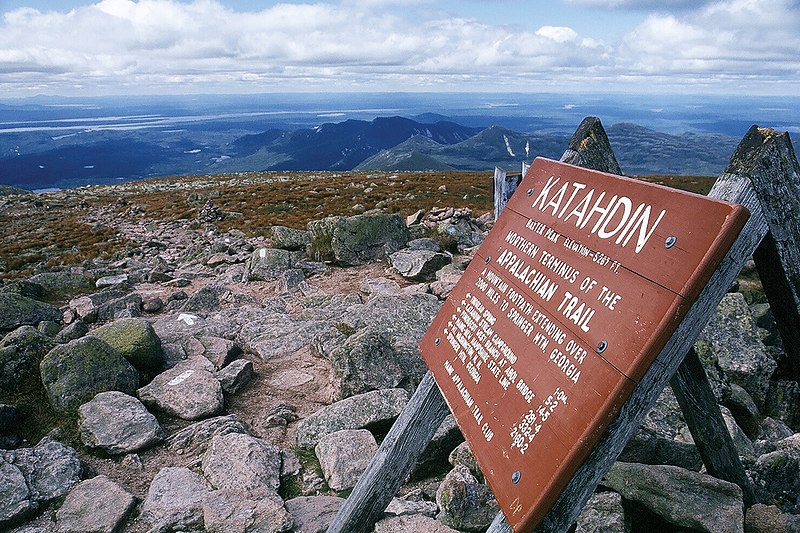
Setting out on June 15th, Jennifer had planned to walk for longer days than she did on her 2008 AT hike. She began at the trail head on Mount Katadin in Maine and kept chugging along south until she reached the end in Georgia over the weekend, where she was met by about 50 people, who were on hand to welcome her to the finish line.
The full story of her trek will probably come out once she's had time to rest and recover, and I'm sure she has some interesting stories from the trail. Along the way, she had to deal with some nagging injuries, intense heat, and plenty of other obstacles, and yet she stayed focused, hiked 15-16 hour days, and averaged about 3 miles per hour while on the move. Not bad all things considered.
Congrats to Jennifer on this impressive feat. The AT is no easy trail to tame and to do it in a month-and-a-half is really amazing. Well done!
Tuesday, June 7, 2011
Thru-Hiker Looks To Break Own Speed Record On The AT
Hiking the Appalachian Trail end-to-end is no easy feat. Stretching from Maine to Georgie, the trail is nearly 2200 miles (3540km) in length, winding its way up and down, and back up again, through the Appalachian Mountains. Next week, thru-hiker Jennifer Pharr Davis will set out to break the women's speed record for the trail by averaging more than 46 miles per day, which is obviously a very ambitious pace. If anyone can do it however, it'll be Jennifer, who set the current record herself back in 2008.
Before setting out, Jennifer sat down with National Geographic Adventure and gave an interesting interview about her approach to long-distance hiking. That interview is now available on the NG Adventure Blog.
In the interview, Pharr Davis discusses why she wants to go after her own record, and possibly the overall record for men or women, how she approaches a 46-mile per day pace, and the training she has been going through in preparation for the hike. She also says she expects to go through six or seven pairs of shoes (Salomon are trail shoes of choice!) along the way and burn in excess of 6000 calories per day as well. She also touches on her favorite pieces of gear, her bid to become a "professional hiker," and what's next after she conquers the AT for a second time.
Jennifer's current record for the end-to-end hike is 57 days, 8 hours and 35 minutes. Her pace on that hike was about 38 miles per day, and while she intends to complete the trek sooner this time out, she doesn't expect that her pace will increase. Instead, she plans to hike for two additional hours each day, as on her last hike, she wasn't prepared to continue into the night. That has changed, and since she wants to make a serious assault on her own record, she knows she'll have to find ways to stay on the trail longer.
Good luck to Jennifer on her hike. Don't forget to enjoy the walk while you're out there Jen!
Tuesday, March 8, 2011
The Appalachian Trail Done In Five Minutes
I posted this cool video over at Gadling this past weekend, but wanted to share it here as well. It was put together by thru-hiker Kevin Gallagher, who spent six months covering the Appalachian Trail end-to-end. When he got home, he made this video using still images that he took along the way. The result is a stop motion depiction of what it is like to hike all 2175 miles of the AT. It is also the perfect way to starty your morning. Enjoy!
Green Tunnel from Kevin Gallagher on Vimeo.
Monday, February 14, 2011
12,500 Mile 'All-In Trek' Is Underway
Way back in September I told you about Samuel Gardner and his "All-In Trek." It was around then that Samuel first announced his plans to hike the North Country Trail, Appalachian Trail, Continental Divide Trail and Pacific Crest Trail, all back-to-back. On January 1st of this year, he set out to do just that, and now, a month and a half in, he's started to receive a great deal of attention for his efforts.
If successful, Gardner will cover more than 12,500 miles (20,117km) on his adventure. He began his journey on the North Country Trail, which stretches 4600 miles from New York to North Dakota. At the moment, he is 45 days into that march, and when you consider that it is still deep winter in the states he's crossing through, you begin to have an appreciation for what he has undertaken. In fact, the weather has been down right awful for him on the trail thus far, but he was well prepared for that and has made solid progress thus far.
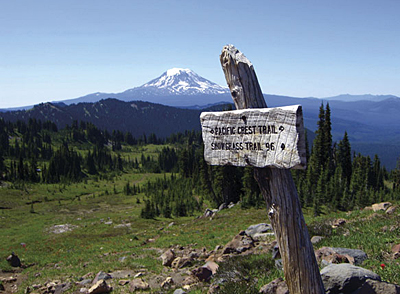
Once he finishes off the North Country Trail, Gardner will move on to the 2650 mile (4264km) Pacific Crest Trail, which he'll travel south to north, ending at the Canadian border. Then it's off to the Continental Divide Trail (3100 miles/5000km) which he'll tackle going north to south, before finally heading over to the Appalachian Trail, which is 2175 miles (3500km) in length, and will cap the expedition. The plan is to complete the journey in just one year, which means that Sam will have to average roughly 34 miles per day to achieve that goal.
National Geographic Adventure recently did a brief interview with Gardner, which you can now read on their Adventure Blog. In the interview, Sam talks about his inspirations for the trek, what weather conditions have been like so far, as well as his favorite trail foods. You can about his thoughts on those subjects, and a whole lot more, by clicking here.
You can also read daily updates on Sam's progress on his website's Journal section, which offers plenty of great insights into what it is like on the trail.
Good luck Sam!
Labels:
Appalachian Trail,
Backpacking,
Continental Divide Trail,
Hiking,
Pacific Crest Trail,
Trekking
Blind Hiker Preps For Continental Divide Trail
This was my story over at Gadling.com this morning, but definitely worth sharing here as well. The current issue of Expedition News reports that blind hiker Trevor Thomas will attempt to thru-hike the entire length of the Continental Divide Trail, covering more than 3100 miles (5000km) from the Canadian border south to the Mexican border.
The trek is set to begin in June, when Thomas will set out with three companions who will assist him through some of the more challenging, harder to navigate, sections of the CDT. As the name of the trail implies, the route runs along the Continental Divide, the line from which rivers on one side of the Rocky Mountains head east, while those on the other side travel west. The trail passes through five states, including Montana, Idaho, Wyoming, Colorado, and New Mexico.
The CDT makes up one third of the "Triple Crown" of thru-hiking in the U.S., with the Appalachian Trail and the Pacific Crest Trail rounding out the list. Those trails are 2175 miles (3500km) and 2650 miles (4264km) in length respectively, and Thomas has already covered both of them. He went solo on the AT back in 2009 and had some assistance through deep snow on the PCT in 2010.
Find out more about Trevor and his team at TeamFarsight.org and expected updates on that site once the expedition officially gets underway in a few months time.
Wednesday, September 8, 2010
Long Distance Trekker Set To Go "All-In" For 2011
Long distance hiker Samuel H. Gardner is preparing for an epic adventure in 2011 when he plans to set out on his "All-In Trek", which will see him taking on four BIG trails in the U.S. and covering more than 12,500 miles in the process.
The plan is for Gardner to begin his journey by hiking the length of the North Country Trail from New York to North Dakota, in winter no less. That is a 4600 mile hike in and of itself. From there, he'll move directly on to the 2650-mile long Pacific Crest Trail before hopping over to the Continental Divide Trail, which will add another 3100 miles to the trek. Finally, he'll finish things up with a little 2178-mile long stroll down Appalachian Trail just for good measure. Samuel will go on the journey solo, and will hike the trails back-to-back in continuous fashion, with the hopes of completing the entire project in just one calendar year.
CheapTents.com has an excellent interview with Gardner on their blog today in which he talks about his inspirations for making this trek, the experiences that have given him the confidence to attempt the journey, and much more. Gardner says that he is going on the All-In Trek because he feels it is the next step for long distance backpackers and that he simply wants to experience the adventure of it. Clearly he also enjoys testing himself as well, as he once spent six months living in a snow cave just to see if he could.
At the moment, Gardner is in the final stages of planning and preparation, and has been training hard for what is sure to be a long year on the trail. January is still a few months off, but there is a lot to do before he gets underway.
And for those keeping score at home, Sam is going to have to average more than 34 miles per day to complete the trek in a single year. That's a very ambitious pace to say the least.
The plan is for Gardner to begin his journey by hiking the length of the North Country Trail from New York to North Dakota, in winter no less. That is a 4600 mile hike in and of itself. From there, he'll move directly on to the 2650-mile long Pacific Crest Trail before hopping over to the Continental Divide Trail, which will add another 3100 miles to the trek. Finally, he'll finish things up with a little 2178-mile long stroll down Appalachian Trail just for good measure. Samuel will go on the journey solo, and will hike the trails back-to-back in continuous fashion, with the hopes of completing the entire project in just one calendar year.
CheapTents.com has an excellent interview with Gardner on their blog today in which he talks about his inspirations for making this trek, the experiences that have given him the confidence to attempt the journey, and much more. Gardner says that he is going on the All-In Trek because he feels it is the next step for long distance backpackers and that he simply wants to experience the adventure of it. Clearly he also enjoys testing himself as well, as he once spent six months living in a snow cave just to see if he could.
At the moment, Gardner is in the final stages of planning and preparation, and has been training hard for what is sure to be a long year on the trail. January is still a few months off, but there is a lot to do before he gets underway.
And for those keeping score at home, Sam is going to have to average more than 34 miles per day to complete the trek in a single year. That's a very ambitious pace to say the least.
Labels:
Appalachian Trail,
Backpacking,
Continental Divide Trail,
Hiking,
North Country Trail,
Pacific Crest Trail
Friday, April 2, 2010
The Appalachian Trail Faces Challenges
At 2178 miles in length, the Appalachian Trail is one of the longest and best known trails in the world. In fact, it has served as the basis for many other long distance hiking trails around the globe, and for backpackers, it is often considered one of the crown jewels of trekking. But a few days back, the National Parks Conservation Association released a report that examined some of the unique challenges and opportunities that the AT has in front of it if it is to remain the unique resource that it is.
Entitled Appalachian National Scenic Trail: A Special Report, the document takes a look at the cultural and natural resources that line the trail, which runs from Maine to Georgia, and attracts thousands of hikers each year. Amongst the biggest challenges for the AT are over development of the lands adjacent to the trail, air quality and pollution concerns, and a lack of adequate funding to protect and further develop trail resources and historic sites along the route.
To help further identify and spotlight some of the locations of interest along the trail the NPCA has posted this handy map that gives more insight into exactly what portions of the trail are at risk. Some of the development that is sited in the report include the building of power lines, pipelines, and even racetracks next to the trail, all of which take away from the scenic beauty and disrupt the natural environments there.
But the Appalachian Trail Conservancy and the Appalachian Trail Park Office are not standing still on these issues. Those two groups are working hard to protect and monitor the AT, as well as to educate the public about their concerns. The Appalachian Trail is one of the great outdoor resources in the U.S., and it is important that we protect it now, before it becomes too late. It is an amazing hike, and future generations of backpackers should be given the opportunity to enjoy it too.
To read the report in PDF format click here.
Labels:
Appalachian Trail,
Backpacking,
Hiking,
Trekking
Monday, March 1, 2010
Blind Hiker Set To Challenge Appalachian Trail

The 2174 mile long Appalachian Trail is a tough enough challenge for any backpacker to handle on a single thru-hike. The classic trail runs through the Appalachian Mountain range of the Eastern United States, from Maine to Georgia, and passes through 12 other states along the way. It is a truly epic hike with truly epic challenges. But now, according to this story in the Minneapolis Star Tribune, a blind hiker is going to take on those challenges for himself.
44-year old Mike Hanson set off this morning from the Georgia end of the trail, and hopes to complete his journey in seven months time, when he'll cross the finish line in Maine. Along the way, he'll use a special GPS device that connects to his phone to help him navigate and he says that the device offers him everything he needs, except for the view. In fact, the gadget offers 32-hours of battery life, which is vital to a hike such as this one, and verbally reads the GPS information to the hiker as he goes.
Mike plans on covering roughly 15 miles per day, with a stop once per week in a town to resupply. The entire journey is also being filmed so that a documentary can be made of the hike, which means that Mike will be joined by cameraman Gary Steffens, who says that he won't navigate at all, he'll simply be along for the walk, following Mike at every turn.
As the article points out, Mike won't be the first person to make such a hike, but he might just be the first to navigate it himself. Of the 11,000+ hikers who have completed the thru-hike, 3 or 4 of them have been blind. Those have tended to go with others as their guides or used a guide dog instead. Hanson has programmed the entire route of the AT into his GPS device, and had already tested is route finding out on a 40 mile stretch to be sure that it all works. With success on that stretch of the trail, he's now ready to uses his gadgets to navigate its entire length.
You can follow along with Mike's progress on his website, with updates coming via Facebook.
Labels:
Appalachian Trail,
Backpacking,
General Adventure,
Hiking
Thursday, December 3, 2009
The Lure of the Long Trail Part 4

I've posted links to Trail Space's interesting articles on long distance hiking before. The four part series started some weeks back, and you can still find Parts 1, 2, and 3 online at their website.
The fourth, and final, part of the series has now been posted as well, wrapping up the series, and offering some final thoughts and advice for those thinking of making an epic trail hike, such as the Appalachian or Pacific Crest Trails. This time out, author Barbara Egbert reminds us to be educated about our hikes and be prepared for the unexpected.
The final portion of the the article has a nice list of books that are recommended reading for those thinking of tackling one of the big epic hikes, although most of them would be great reading for any outdoor enthusiast, even if they think a long hike is to the mailbox and back. There are a few classics on the list that are definitely worth adding to the bookshelf.
All in all, I felt the series was good one with some sound advice for anyone thinking of making a major hike. Others have criticized it for being mostly common sense, but sometimes that's all we need. It reminds us of things we take for granted or may have forgotten. And if it inspires one more person to hit the trail, and teaches someone something new, than the articles accomplished their purpose.
Labels:
Appalachian Trail,
Backpacking,
Camping,
Hiking,
Pacific Crest Trail,
Trekking
Tuesday, November 10, 2009
More Tips For Long Distance Hikers From Trailspace

Awhile back I posted a link to a story from Trailspace.com that gave an amazing number of tips for backpackers who were considering doing a long distance hike, such as the Appalachian or the Pacific Crest Trails. The article was the first of a four part series on planning and preparing for just such a trek. Trailspace has now followed up with parts two and three as well.
Part Two continues the series nicely offering up some thoughts on how to plan on being away from work, friends, and family for the extended time necessary for a long distance hike. It also talks about who should and shouldn't do one of these epic trails to help you decide if it is right for you, and goes on to share some thoughts on options for food on the trail, packing your bag, dealing with water, and a lot more.
Part three moves away from some of these logistical issues and discusses some practical ones, with more solid advice on staying healthy on the trail, not taking chances, and so on. It also offers up some insights about long distance hiking in general that can be applied to just about any trail, whether you're out there for three days or three months. Those bits of wisdom include things such as "the journey is the destination" and so on. Good things to keep in mind when you're setting out on any journey.
So far, this has been an excellent series to read, and I definitely recommend it to hikers of all levels. I pretty much guarantee that you'll find something of interest and probably learn something in the process too. Really good stuff and I can't wait for the final installment.
Labels:
Appalachian Trail,
Backpacking,
Continental Divide Trail,
Hiking,
Pacific Crest Trail,
Trekking
Wednesday, October 28, 2009
Tips For Long Distance Hikers

Trailspace.com, which has always been an excellent resource for backpackers and hikers everywhere, has begun a great new series of articles designed to help long distance thru-hikers to tackle any of the long distance hikes in the U.S., such as the Appalachian, Pacific Crest, and Continental Divide trails. But even if you don't intend to tackle one of those 1000+ mile long monsters, the information is helpful for shorter treks too.
The planned four part series begins with this article which focuses on planning your hike. Author Barbara Egbert starts with some details on the Triple Crown of thru-hiking, laying out what you can expect on the three major trails linked to above, and how they all differ from one another.
The article then goes on to examine the gear that you'll need, with an emphasis on lightweight but durable equipment. Tents, sleeping bags, and packs are all important considerations on any trip, but especially on one that will go for hundreds of miles. Choosing the right clothing and shoes are also very important as well of course.
From there, it's on to some suggested training methods to get in shape for the miles ahead. Several thru-hikers give tips on their approaches to preparing for the trails, with strong recommendations of being in great shape before you go. The story also recommends that if you're going to hike alone you should train alone in order to get use to the conditions you'll experience while traveling miles on end by yourself.
Finally, the article concludes with a list of great books that cover each of the major trails, offering up resources that will be invaluable for long distance thru-hikers as they prepare for one of these major hikes. The suggestion being that if you're considering one of these hikes, you'll want to pick up the guide now, read it in the winter months, and begin collecting your gear and training for a 2010 epic hike.
This look like it's going to be a great series, and a must read for anyone wanting to backpack anything longer than a weekend escape. Good stuff so far.
Labels:
Appalachian Trail,
Backpacking,
Continental Divide Trail,
Hiking,
Pacific Crest Trail,
Trekking
Subscribe to:
Posts (Atom)