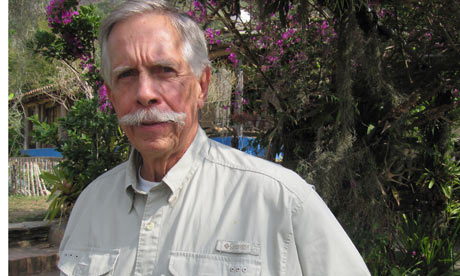
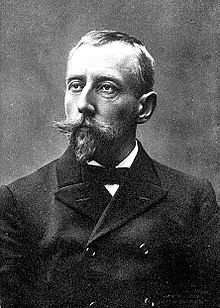
CheapTents.com has posted a great new interview with explorer and adventurer Alastair Humphreys to their blog. Humphreys is well known for having cycled around the world and trekking across Iceland, amongst numerous other adventures. Most recently, Alastair has been promoting "microadventures" as a way to inspire everyone to add some adventure back into their lives.
In the interview, Humphreys talks about what inspired him to become an adventurer and which of his journeys has been the most challenging so far. He also mentions his fondness for micoradventures close to home and shares his favorite pieces of gear, while giving us a few insights into what he has planned for the future. Hint: It involves a very long journey in a very cold place.
My friends at CheapTents were once again kind enough to let me tag a few questions on to their interview, and one of the things I asked was what tips Alastair had for adding a little adventure into our normal, day-to-day, lives. His response was the best advice that I think anyone could give: "Do it!" He of course goes on to expound on that notion, but too often we let little things get in the way of our living life more. We put up our own obstacles and make excuses. Sometimes, if you just "do it" you learn that those obstacles fade away and soon get left behind altogether.
Thanks to Alastair for such great responses and thanks to CheapTents for letting me be a part of the fun once again. Great work guys!
Showing posts with label Exploration. Show all posts
Tuesday, September 13, 2011
Monday, August 1, 2011
Inside The Explorers Club
The Explorers Club is an organization dedicated to adventurers and explorers from around the globe. Today, the Huffington Post gives us an inside look at the club in both this article and the video posted below. The EC is usually closed to non-members –and membership is exclusive– so this may be your one and only chance to see what the place is like. I know I'm still waiting on my invite to visit!
Wednesday, July 27, 2011
Five Explorers For The Future
It's no secret that I'm a fan of Jon Bowermaster's writing. He regularly posts interesting and thoughtful pieces on his own website, as well as TakePart.com. We both just happen to be contributors at Gadling as well, and today Jon has posted a great piece that looks at five up and coming explorers for the future.
Jon starts the article out by defining just what exploration will mean in the 21st century. As he notes, there really aren't any new lands to explore and our quest for precious metals and other rare commodities has morphed into a search for alternative energy sources and cures for diseases. He argues that the new area of exploration is more science based and involves as much time in the lab as it does in the field.
With that in mind, Jon does offer us five emerging explorers to keep our eyes on in the future. Those include: Hayat Sindi, who is developing new ways to monitor health and medical needs in developing parts of the world. She is joined by Ashley Murray, who is tackling wastewater issues, and Kevin Hand, a rocket scientist charged with designing a propulsion system to take a probe to Europa. Juan Martinez, who works to inspire youth to get outside, and Tuy Sereivathana, a conservationist who is protecting elephants in Cambodia, round out the list.
If some of those names sound familiar, it is because they are all on National Geographic's Emerging Explorers list for 2011, which I wrote about back in May. They also represent the changing face of exploration in the new millennium – an era that is also shifting our thoughts on what is important in this field. The days of the stalwart explorer in a pith helmet carving his way through the unknown regions of the jungle are mostly over, and these are the explorers that are going to lead us into the future.
Labels:
Exploration,
Jon Bowermaster,
National Geographic
Thursday, July 14, 2011
The Explorers Club and Eddie Bauer Offer Expedition Grants
The Explorers Club and Eddie Bauer are joining forces to offer adventurers an opportunity to get their expeditions funded. Applications are now being accepted for two Explorers Club-Eddie Bauer Grants, each of which offer $25,000 to worth recipients.
The first grant is the The Explorers Club - Eddie Bauer Youth Grant, which will be given to one or more eligible applicants (valid student I.D. required) for work in climate change, preservation and sustainability, consistent with the mission of The Explorers Club. Applicants must display a history of field research or academic study in one of these areas, although they do not need to have an advance degree. The $25,000 award could be divided amongst up to three projects if the grant board finds them worthy.
The second grant is The Explorers Club - Eddie Bauer Grant for Expeditions, which is to be used to fund one or more eligible expeditions relating to climate change, preservation and sustainability, consistent with the mission of The Explorers Club. The goal of this grant is to "support field research activities around the world in keeping with the mission of The Explorers Club and the untamable spirit of adventure, core to the Eddie Bauer brand." This one is more open in terms of who can apply, although the focus should be on environmental research or sustainability in some way.
You can find out more about these grants, and how to apply, by clicking here. Winners will be notified by November 30th of this year and will receive their awards at the Explorers Club annual dinner to be held in March of 2012.
Thursday, July 7, 2011
Head's Up Philly! Have Afternoon Tea With Explorer Charles Brewer-Carias This Saturday
If you live in Philadelphia, and you're looking for something fun to do this weekend, then be sure to drop by the Union League at 4 PM on Saturday where The Adventurists are holding their third "Afternoon Tea" event in the U.S. This time, they'll be playing host to legendary explorer Charles Brewer-Carias, a man who has been called "real life Indiana Jones."
The 72-year old Brewer-Carias has indeed led a charmed life. The explorer/naturalists/writer/adventurer lives in Venezuela where he remains just as active and adventurous as he did nearly 50 years ago when he first started to explore the jungles there. According to this story, that appeared in The Guardian last year, Breiwer-Carias has explored the largest quartzite cave system in the world, has had 27 plants, reptiles, insects and a scorpion named in his honour; and holds the record for starting fire with sticks, clocking in at an impressive 2.7 seconds. He has also logged more than 200 expeditions into the bush and doesn't plan on stopping anytime time soon.
The Afternoon Tea event will give fans of exploration and adventure a chance to meet and chat with Brewer-Carias, who will no doubt share all kinds of tales from his exploits in the South American jungle. The event is scheduled to run from 4 PM to 9 PM. Full details can be found by clicking here.
Sounds like a great evening. Wish I were in Philly to join in on the fun. I'd love to hear from anyone who attends how it goes. Charles sounds like a very interesting guy.
Friday, June 24, 2011
National Geographic Announces 2011 Explorers of the Year
![]() |
| Kenny Broad (Photo by Rebecca Hale) |
Last night, National Geographic held their first ever "Evening of Exploration" during which they announced the winners of their inaugural Explorers of the Year awards. During the event, three individuals and a corporation received recognition for their efforts in a variety of fields.
The 2011 Explorers of the Year award went to environmental anthropologist Kenny Broad and underwater photographer Wes Skiles, for their efforts in exploring and documenting the Blue Holes of the Bahamas last year. This was particularly fitting, as the theme of the evening was "Oceans."
Broad is a professor at the Rosenstiel School of Marine and Atmospheric Science and serves as the director of the University of Miami’s Leonard and Jayne Abess Center for Ecosystem Science and Policy. He also co-directs the Center for Research on Environmental Decisions at Columbia University. Broad specializes in the study of the interaction between humans and their environment.
Skiles worked as a freelance photographer and produced, directed and filmed over 100 projects for television. He was an accomplished diver who specialized in filming and photographing underwater caves, having explored those beautiful, yet dangerous environments, in Mexico, Brazil, Puerto Rico, Australia, Antarctica and the Bahamas. Sadly, he passed away last year on a dive off the coast of Florida. His family accepted the award for him posthumously.
Also honored at the event were musician Jack Johnson and the IBM corporation. Johnson was the recipient of the "Arts Ambassador for the Environment Award," which is presented to an individual in the entertainment field who has taken a leadership role in raising awareness about environmental issues. IBM took home the "Chairman's Award" for their work with Nat Geo on the Genographic Project, a a ground breaking piece of research that examines how human populations migrated across the planet.
Photo: Environmental anthropologist Kenny Broad and late underwater photographer Wes Skiles were named National Geographic “Explorers of the Year” for their extraordinary achievements in exploring and documenting the Blue Holes of the Bahamas in 2010. Broad is seen here accepting his award at the inaugural “Evening of Exploration” event. (Photo by Rebecca Hale)
Labels:
Exploration,
General Adventure,
National Geographic
Thursday, June 23, 2011
BBC Video On Uncontacted Tribes
Yesterday I posted a story about another uncontacted tribe being discovered in a remote region of the Amazon Rainforest in Brazil. In that post, I mentioned that there are a number of such tribes in the Amazon, and that the Brazilian government has been taking steps to protect them and their environment from outside threats. It turns out, the BBC documentary Human Planet filmed a piece on those tribes, which you can watch below. The video does a good job of explaining the situation while offering up some fascinating images of these isolated people who continue to live in the same manner that they have for generations.
While watching the video and seeing these tribes first hand, I can't help but wonder what they think about the airplane that is flying overhead and shooting the images. The narrator says that the plane stayed a kilometer away, but I'm still intrigued by thoughts of what that first contact was like for the people in the village.
Big thanks to Ethnonomad for sharing the video with me!
While watching the video and seeing these tribes first hand, I can't help but wonder what they think about the airplane that is flying overhead and shooting the images. The narrator says that the plane stayed a kilometer away, but I'm still intrigued by thoughts of what that first contact was like for the people in the village.
Big thanks to Ethnonomad for sharing the video with me!
Wednesday, June 22, 2011
Another Uncontacted Tribe Discovered In The Amazon
Brazil's National Indian Foundation, better known as Funai, has announced that it has discovered a new, uncontacted tribe in a very remote region of the Amazon Rainforest. The organization first spotted a clearing on satellite images, then used airplanes to fly over the region. According to this story from The Guardian, those flyovers spotted four small huts built next to banana trees and surrounded by very dense jungle.
The tribe is said to live in an area close to the border between Brazil, Peru, and Bolivia. Experts estimate that there are approximately 200 people living in the village, none of which have ever seen or met someone from the outside, modern world. The discovery brings Funai's official count of uncontacted tribes up to 14, with approximately 2000 people living in those tribes.
The Brazilian government has made it a policy to not establish contact with these indigenous people, and instead they work to protect their lands. Those regions have come increasingly under threat in recent years due to logging, poaching, and mining and other outside influences. There is a fear that contact will eventually have to be established because of those threats.
This story reminds me of a similar one from a few years back. When I wrote that story I remarked about how remarkable it is that these primitive tribes still exist in the wildest places on our planet. We take so much for granted in our modern lives, and yet these people have continued living a simple, yet successful lifestyle for centuries on end. That is such an amazing thing.
Friday, June 17, 2011
Polar Explorers Wanted! No Experience Necessary!
Have you ever wanted to join a major arctic expedition making a journey to remote and unexplored place? Then you're in luck, as polar veteran Jim McNeill is planning to travel to the North Pole of Inaccessibility, and he's looking for partners to join him on that mission.
For those that aren't aware, the North Pole of Inaccessibility is defined as the furthest point from any coastlines, or essentially the very middle of the Arctic Ocean. According to the latest calculations, that point falls at the coordinates of: 85.78 North, 176.15 East, and has never been visited by explorers traveling on foot.
In the spring of 2012, Jim and his hand picked team will attempt to make that journey. Starting in February of next year, he and the other polar explorers will begin an 800-mile long, 80 day quest to reach the Pole of Inaccessibility. That journey will be broken into four legs, with each leg lasting 20 days each. McNeill is looking to find team members to join him on each of those legs.
If you're interested in joining the expedition, you'll want to attend the Ice Warrior Induction Weekend, scheduled to be held July 8th - 10th in a remote location in the U.K. That weekend will serve as an introduction of what the expedition will be like and offer would be polar explorers the opportunity to meet one another and work as a team. After that, full blown training weekends and a week-long training expedition will prepare the team for the challenges they'll face out on the Arctic Ocean. Interested parties will have to pay for their training and gear, as well as help with fund raising, but they'll also get the opportunity to take part in an expedition that very well may be the "last true world first in polar regions."
You may recall that this expedition was originally set to take place last year, but the team was forced to post-pone the attempt due to unstable conditions on the ice. Hopefully they'll get their opportunity in 2012.
For more information, go to Ice-Warrior.com.
Wednesday, June 15, 2011
Communicating From The Far Corners Of The World
We are living in an amazing age. Technology continues to evolve at an astounding rate, and our methods of communications, even from remote places, has turned the planet into one giant global neighborhood. The ability to share our adventures, even while in the field, has changed our perception of exploration, as we are now able to stay in constant contact with explorers that are pushing the boundaries of what we thought was possible. Now days, it seems strange when an expedition sets off without having some form of communications back to the world, which is what makes a blog like this one possible.
Yesterday, Explorers Web posted a story written by Seth Wolpin, a climber who recently summited Everest. In the article, Seth discusses the various communications tools that are now available to mountaineers on their expedition and gives some great information on what he used during his climb.
As we all know, Everest received a major upgrade this year with the inclusion of 3G cell service that, when working, actually reached all the way to the summit. The cell tower for the service was built in Gorak Shep, and powered by solar panels, and when early season clouds covered the region, the tower wasn't functional for much of the time. Thankfully, good old semi-reliable satellite phone service still operated when necessary.
Seth's article is both practical and functional as he lays out the tools that he used on his expedition. He discusses options for both voice and data, and applies it to use in cell phones, sat phones, laptops, and more. He shares tips on pre-paid services, texting, sending e-mail, and setting up a data connection on a computer. If you're a tech oriented person, a lot of this will likely seem like old hat, but if you're not as technologically adept, you'll probably learn quite a bit, and much of this can be applied to your next adventure in the field as well.
In the future, I suspect data connections will continue to get faster and more reliable, and we'll probably see those connections become the primary method of communications from Everest Base Camp and beyond. Who would have thought even a few year ago that a device like the SPOT Connect would allow us to use our smartphones to send texts and other data from just about anywhere on the planet. Expedition communications gear is really evolving quickly, and it is changing the nature of extreme adventures along with it.
Labels:
Expedition,
Exploration,
General Adventure,
Mount Everest,
Nepal,
Technology
Monday, June 6, 2011
Equatoria Update: Mozambique Crossing Finished!
Remember the Equatoria expedition that I've mentioned a few times in recent months? It is the attempt by American explorer and scientist Julian Monroe Fisher to cross Africa on foot, beginning with Mozambique and heading west across the Democratic Republic of the Congo, Zambia, and Malawi, before eventually finishing in Angola. According to an update I received a few days ago, the first leg of that journey is now complete, with Julian having completed the crossing of Mozambique, although for safety reasons, he was forced to use a motorcycle for a portion of the trip.
Apparently the journey hasn't been an easy one thus far. In the press release he is quoted as saying: "The crossing of Mozambique was much more challenging than I had ever anticipated. There were vast areas for several hundred kilometers along what appeared on my maps to be a road which in actuality was a single trail along which there were no recognizable villages. For the most part I lived off cassava root, maize, boiled noodles and bananas. Because of the unpredictable movement of wildlife to include elephants officials with the Mozambique government advised me that it was unsafe to walk so for sections I had to ride alone a motorcycle which I bought and then sold along the trail. At times the trail was submerged in water and I had to hire locals to help me carry the motorcycle above the waterline. It was quite unnerving in areas known for land mines, especially since landmines tend to shift location during the rain season that had just ended.”
With this first major hurdle out of the way, Fisher has now crossed Lake Malawi by hired boat, and has begun the next stage of the expedition, an overland trek across the country of Malawi itself. Ultimately he hopes to eventually end up in Lobito, along the Atlantic coast of Angola.
While this is quite an adventure in and of itself, and is meant to be an exploratory expedition as well, Monroe Fisher is also hoping to raise awareness of a problem that plagues the area that he is crossing through, namely land mines. One of his primary goals is to spread the word about the work that the Mines Advisory Group is doing to help remove these dangerous explosives, as well as other weapons and munitions, from old battlefields to help keep people living in those areas safe.
The journey is expected to take many more months to complete, so expect more updates from the field in the near future.
Wednesday, May 18, 2011
National Geographic Announces 2011 Emerging Explorers
National Geographic has announced the 2011 list of Emerging Explorers, a distinction they bestow upon young adventurers, scientists, photographers, and storytellers who are already making a significant contribution to their field, even at a particularly young age or early stages of their profession. These are men and women who are on the cutting edge of science and exploration, with the potential to do great things. In support of these individuals, Nat Geo awards them a $10,000 grant to continue pursuing their work.
Amongst the 14 recipients of Emerging Explorer status this year is Tuy Sereivathana, a conservationist from Cambodia who is working to protect the endangered elephant population in his home country. He is joined by Aziz Abu Sarah, a man who is working to bridge relations between Israelis and Palestinians, and Kevin Hand, an astrobiologist who will search for life in the oceans of Europa, the fourth largest moon of Jupiter. Ecologist Sasha Kramer earns a spot on the list for her work in addressing basic health and sanitation needs in Haiti, while Kakani Katija studies the effects of creatures living in the ocean on the waves and tidal currents, which have a broader effect on the world.
This is just a sample of the great work these explorers are pursing. Most are in the field and actively researching their particular interests. They are on the forefront of some very important cultural, ecological, and historical studies, and if past recipients of the Emerging Explorers award are any indication, you're likely to hear at least some of these names again in the years to come.
A hearty congratulations to the winners. This award is much deserved! Keep up the great work!
Labels:
Exploration,
General Adventure,
National Geographic
Tuesday, April 5, 2011
Universal Sports Network Declares April Adventure Month!
The Universal Sports television network, which is owned and operated by NBC, has declared April Adventure Month, and has scheduled a whole host of great outdoor oriented programing to celebrate. If you're luck enough to live in a market that gets the channel, you'll have plenty of great television to enjoy over the next few weeks.
Amongst the great shows that you can enjoy throughout the month of April are a series of documentaries from our friend Jon Bowermaster. In fact, the entire collection of Jon's Oceans 8 project, as well as his Terra Antarctica film, will be available for viewing. Oceans 8 chronicles eight amazing sea kayaking expeditions to a number of unique and diverse locations around the globe, while Terra Antarctica returns Bowermaster and his team to Antarctica, a place he knows very well, where they explored the effects of climate change on the Antarctic Peninsula. Each of these films is excellent, and will give you a great perspective on the environments they explore, from one of the best vantage points possible – the seat of sea kayak.
To find out where you can watch Universal Sports in your market, click here and to see a complete schedule of programming click here.
On a personal note, if you haven't seen Jon's films, you really should grab this opportunity to do so. They are extremely well done, inspiring, and informative. I have all of the DVD's, and thoroughly enjoyed the all of them. They'll make you want to buy a kayak of your own!
Labels:
Climate Change,
Environmental,
Expedition,
Exploration,
Kayaking,
Paddling
Thursday, March 17, 2011
Nat Geo Interviews Explorers Club President Lorie Karnath
This Saturday is the annual Explorers Club Dinner in New York City, which is expected to be attended by hundreds of explorers, adventurers, and scientists who are on the cutting edge of exploration around the globe. Before that event takes place however, National Geographic Adventure had a chance to interview EC President Lorie Karnath, and posted the Q&A on their blog.
In the interview, Karnath briefly talks about the role explorers play in world events such as the unfolding disaster in Japan, before moving on to the theme of this year's club dinner. That theme is "Maya Prophecy" which extends well beyond the dire predications for 2012. The interview moves on to discuss modern day exploration and how important it is for us in the 21st century. That's just the tip of the iceberg, as Lorie talks about a host of other great topics as well, including her next expedition to a remote part of China.
I've read several interviews with Karnath, and she never fails to impress. She is smart, well read, and very informed of what is going on in the world of exploration and adventure. This particular interview serves as a bit of a "State of Exploration" address, and is definitely worth the read.
Tuesday, January 11, 2011
NASA Reminds Us Why We Explore
Check out this amazing video that comes our way courtesy of NASA. It is both inspiring and thought provoking at the same time, with plenty of stunning imagery and a fantastic message for everyone who inhabits this little blue rock we call Earth. Great stuff.
Thursday, December 16, 2010
Saluting Roald Amundsen
Yesterday marked the 100th anniversary of Roald Amundsen, and his team, becoming the first men to reach the South Pole. Back in 1911, the Norwegian explorer was locked in a heated battle with other explorers, who were also looking to declare themselves the winner in this race, which at the time was viewed as a matter of national pride. Amundsen won that race because he elected to use sled dogs to reach the Pole, edging out rival Robert Falcon Scott by just a few weeks.
The journey to 90ºS was a tough one. The team faced -70ºF temperatures, ranging blizzards, and low supplies. Yet they persevered, and like true explorers of the time, planted their flag in the name of Norway. A dejected Scott would later find that flag upon his arrival to the Pole, which surely was the start of his downward spiral that ultimately led to his demise.
But Amundsen survived his trek to the South Pole and went on to become the first man to reach both the North and South Pole as well. He also was the first to complete a crossing of the Northwest Passage, adding another milestone to his cold weather adventures, and cementing his status as the greatest polar explorer of all time.
In 1928, Amundsen disappeared somewhere over the Arctic Ocean, when he was helping to conduct a rescue mission of other missing polar explorers. I have no evidence to back up my theory, but my guess is that that was exactly the way he would have liked to have gone.
So, on this date, I want to salute Roald Amundsen. One of the greatest explorers of all time.
The journey to 90ºS was a tough one. The team faced -70ºF temperatures, ranging blizzards, and low supplies. Yet they persevered, and like true explorers of the time, planted their flag in the name of Norway. A dejected Scott would later find that flag upon his arrival to the Pole, which surely was the start of his downward spiral that ultimately led to his demise.
But Amundsen survived his trek to the South Pole and went on to become the first man to reach both the North and South Pole as well. He also was the first to complete a crossing of the Northwest Passage, adding another milestone to his cold weather adventures, and cementing his status as the greatest polar explorer of all time.
In 1928, Amundsen disappeared somewhere over the Arctic Ocean, when he was helping to conduct a rescue mission of other missing polar explorers. I have no evidence to back up my theory, but my guess is that that was exactly the way he would have liked to have gone.
So, on this date, I want to salute Roald Amundsen. One of the greatest explorers of all time.
Labels:
Antarctic,
Arctic,
Expedition,
Exploration,
History,
North Pole,
South Pole
Wednesday, November 10, 2010
Antarctica 2010: ExWeb Posts Expedition List!
The 2010 Antarctic Season is set to begin with a host of adventurers, explorers, and scientists preparing to head to the bottom of the world to take advantage of the spring season there. As usual, ExWeb has a list of the expeditions that will be taking place on the frozen continent, with some very interesting and daring prospects in the mix.
Probably the most challenging of the planned South Pole excursions will be undertaken by Brit Chris Foot, who plans to make a solo-unassisted journey to the Pole on skis that will begin and end at Hercules Inlet. Yep, that's right, Chris hopes to not only reach 90ºS, he then intends to turn around and ski back to where he started. This has never been accomplished before and will take a monumental effort to cover the 1392 miles through the harsh and demanding conditions in Antarctica. Chris is already in Punta Arenas and hopes to be heading out on his expedition soon. Read his dispatches here.
Making her return to the South Pole is Hannah McKeand, who made a solo and unassisted expedition to the Pole back in 2007, setting a speed record at the time. She'll now be guiding other polar explorers who will be relying on her experience in the region. According to ExWeb, Hannah has made three trips to the South Pole with two starting at Hercules and one at the Messner Start.
A ten man team from the Indian Army will be making an unassisted/unsupported journey to the Pole as well. They'll be guided by Devon McDiarmid and they'll be posting dispatches which you can follow by clicking here. Additionally, ExWeb has the scoop on several scientific expeditions that are heading to the Antarctic, each with unique goals and objectives, with the impact of climate changing being chief amongst them.
The Moon-Regan Expedition is set to finally get underway as well. I've mentioned this one on more than one occasion, it's the scientific team that will be traveling 5795km (3600 miles) across the continent in a biofueled snow buggy that can cruise along at speeds in excess of 128 km/hr (80 mph). The team will have a driver in their experimental vehicle and two other support vehicles carrying an additional ten team members. Those vehicles are described as mobile laboratories which the team will use to collect data on the environment as they go.
There will also be plenty of climbers heading to Mt. Vinson, and some other peaks. Climbers with aspirations of bagging the Seven Summits will have their sights set on topping out on Vinson's summit. That's where Alan Arnette will be heading as he begins his quest for Seven Summits as a fund raising effort to find a cure for Alzheimer's. Alan will head out to Chile on Nov. 24.
According to ExWeb the first flights out to Patriot Hills are scheduled to take place on Friday, Nov. 12th, weather permitting. If they go off on schedule, expect the teams to spend an additional day or two there before getting underway, but it looks like we'll be getting updates from the Antarctic as early as next week.
Probably the most challenging of the planned South Pole excursions will be undertaken by Brit Chris Foot, who plans to make a solo-unassisted journey to the Pole on skis that will begin and end at Hercules Inlet. Yep, that's right, Chris hopes to not only reach 90ºS, he then intends to turn around and ski back to where he started. This has never been accomplished before and will take a monumental effort to cover the 1392 miles through the harsh and demanding conditions in Antarctica. Chris is already in Punta Arenas and hopes to be heading out on his expedition soon. Read his dispatches here.
Making her return to the South Pole is Hannah McKeand, who made a solo and unassisted expedition to the Pole back in 2007, setting a speed record at the time. She'll now be guiding other polar explorers who will be relying on her experience in the region. According to ExWeb, Hannah has made three trips to the South Pole with two starting at Hercules and one at the Messner Start.
A ten man team from the Indian Army will be making an unassisted/unsupported journey to the Pole as well. They'll be guided by Devon McDiarmid and they'll be posting dispatches which you can follow by clicking here. Additionally, ExWeb has the scoop on several scientific expeditions that are heading to the Antarctic, each with unique goals and objectives, with the impact of climate changing being chief amongst them.
The Moon-Regan Expedition is set to finally get underway as well. I've mentioned this one on more than one occasion, it's the scientific team that will be traveling 5795km (3600 miles) across the continent in a biofueled snow buggy that can cruise along at speeds in excess of 128 km/hr (80 mph). The team will have a driver in their experimental vehicle and two other support vehicles carrying an additional ten team members. Those vehicles are described as mobile laboratories which the team will use to collect data on the environment as they go.
There will also be plenty of climbers heading to Mt. Vinson, and some other peaks. Climbers with aspirations of bagging the Seven Summits will have their sights set on topping out on Vinson's summit. That's where Alan Arnette will be heading as he begins his quest for Seven Summits as a fund raising effort to find a cure for Alzheimer's. Alan will head out to Chile on Nov. 24.
According to ExWeb the first flights out to Patriot Hills are scheduled to take place on Friday, Nov. 12th, weather permitting. If they go off on schedule, expect the teams to spend an additional day or two there before getting underway, but it looks like we'll be getting updates from the Antarctic as early as next week.
Labels:
Antarctic,
Expedition,
Exploration,
Mount Vinson,
Seven Summits,
South Pole
Monday, October 11, 2010
Above The Arctic Circle: Crossing Lapland By Skis
French adventurer François Quiquet is preparing to make a short, but very challenging, expedition through the Lapland region of Sweden that will see him taking on the tallest mountain in the area, while covering more than 100km of backcountry, well above the Arctic Circle.
The expedition will be made in solo and unsupported fashion on cross country skis along the Kungsleden trail. The route will take him up and over Kebnekaise, the tallest peak in Sweden at 6925 feet. But it isn't the altitude that is so impressive about this peak, it's the fact that it falls 200km above the Arctic Circle, which means that it'll be plenty cold there when François attempts his journey, which he'll be doing by cross country skis while pulling his sledge behind him with all of his gear.
The expedition is expected to take roughly five days to complete, but will serve as test run for bigger things to come. While challenging the remote and frigid northern wildernesses of Sweden, François will also be preparing for future polar journeys to Spitzberg, Baffin, Island or Greenland. The Frenchman says that he looks forward to traveling alone and in a self-supported fashion above the Arctic Circle, which will allow him to test his gear and resolve for those longer expeditions ahead. The region is nearly uninhabited which has made it a popular location for a wide variety of wildlife.
For more on this expedition click here.
The expedition will be made in solo and unsupported fashion on cross country skis along the Kungsleden trail. The route will take him up and over Kebnekaise, the tallest peak in Sweden at 6925 feet. But it isn't the altitude that is so impressive about this peak, it's the fact that it falls 200km above the Arctic Circle, which means that it'll be plenty cold there when François attempts his journey, which he'll be doing by cross country skis while pulling his sledge behind him with all of his gear.
The expedition is expected to take roughly five days to complete, but will serve as test run for bigger things to come. While challenging the remote and frigid northern wildernesses of Sweden, François will also be preparing for future polar journeys to Spitzberg, Baffin, Island or Greenland. The Frenchman says that he looks forward to traveling alone and in a self-supported fashion above the Arctic Circle, which will allow him to test his gear and resolve for those longer expeditions ahead. The region is nearly uninhabited which has made it a popular location for a wide variety of wildlife.
For more on this expedition click here.
Thursday, October 7, 2010
South African Adventurers Gear Up For FEAT Tonight
I've mentioned FEAT more than once here on the Adventure Blog. It's the event that goes down in Johannesburg, South Africa tonight that features 12 top adventurers from that country, with each of them given exactly seven minutes to share an aspect of their expeditions with the crowd. Billed as "the Ultimate Armchair Adventure Experience," it seems like this is going to be one really great evening, with a whole host of interesting speakers on hand to discuss a wide array of topics. I know I wish that I could be there to see it for myself.
The event is sold out, so if you don't already have tickets, you're out of luck. But with just a few hours to go until it begins, I wanted to wish my friend Lisa de Speville the best of luck tonight. Lisa is the founder and organizer of FEAT and I know that she has worked hard to put the event together. Considering it is in its first year, and is already a sell out, I think it is safe to say that it is a success.
For those in attendance tonight, I'm told there are a few surprises that won't be revealed until you're there. So, sit back, enjoy the evening and have fun with your fellow adventurers, armchair or otherwise.
Congratulations Lisa! Enjoy your night as well!
The event is sold out, so if you don't already have tickets, you're out of luck. But with just a few hours to go until it begins, I wanted to wish my friend Lisa de Speville the best of luck tonight. Lisa is the founder and organizer of FEAT and I know that she has worked hard to put the event together. Considering it is in its first year, and is already a sell out, I think it is safe to say that it is a success.
For those in attendance tonight, I'm told there are a few surprises that won't be revealed until you're there. So, sit back, enjoy the evening and have fun with your fellow adventurers, armchair or otherwise.
Congratulations Lisa! Enjoy your night as well!
Labels:
Events,
Expedition,
Exploration,
General Adventure,
South Africa
Tuesday, October 5, 2010
Polartec Challenge Expedition Grant Applications Available, Get $10k For Your Next Adventure
Applications are now being accepted for the 2011 Polartec Challenge Expedition Grants, allowing explorers to receive $10,000 to help fund their next adventure to the far flung corners of the Earth.
Polartec has been issuing these grants since 1991 and have helped fund some of the world's top climbers, explorers, and adventurers to achieve their goals. Past recipients of the grant have included Conrad Anker, Jimmy Chin, Steve House, and many more notable names.
The grants are awarded to teams who are looking to make a low impact, cost effective expedition that is both culturally and environmentally friendly. All applications are evaluated on a variety of merits, including "vision, commitment, educational and cultural value." The Polartec Challenge Expedition Grant is not, however, available for projects that are used for fund raising or to promote some type of competition.
Past winners of the grant have used the funding to trek through remote deserts, paddle off the Antarctic coast, and tackle some of the toughest peaks on the planet. In addition to the cash prize, winners are also outfitted with a range of Polartec gear that will keep them warm, dry, and comfortable on their journey.
The deadline for submissions is November 1st, 2010 and the application can be found online by clicking here. Good luck everyone!
Polartec has been issuing these grants since 1991 and have helped fund some of the world's top climbers, explorers, and adventurers to achieve their goals. Past recipients of the grant have included Conrad Anker, Jimmy Chin, Steve House, and many more notable names.
The grants are awarded to teams who are looking to make a low impact, cost effective expedition that is both culturally and environmentally friendly. All applications are evaluated on a variety of merits, including "vision, commitment, educational and cultural value." The Polartec Challenge Expedition Grant is not, however, available for projects that are used for fund raising or to promote some type of competition.
Past winners of the grant have used the funding to trek through remote deserts, paddle off the Antarctic coast, and tackle some of the toughest peaks on the planet. In addition to the cash prize, winners are also outfitted with a range of Polartec gear that will keep them warm, dry, and comfortable on their journey.
The deadline for submissions is November 1st, 2010 and the application can be found online by clicking here. Good luck everyone!
Labels:
Expedition,
Exploration,
General Adventure,
Mountaineering
Subscribe to:
Posts (Atom)