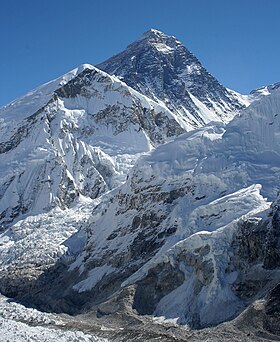
With the summer season in the Karakoram now behind us, climbers are heading back to the High Himalaya in Nepal and Tibet for the fall season. While this is a much quieter time of year, when compared to the hustle and bustle of spring, there are still plenty of teams looking to bag summits in the weeks ahead.
Some of the climbers have already come and gone through Kathmandu and are now acclimatizing on their mountain of choice. For example, the Himex team is on Manaslu (8156 meters/26,759 ft) this fall, and have already gone as high as Camp 1, located at 5547 meters (18,200 ft), where they spent three nights last week. While most expeditions to the Himalaya are special in their own right, this one is even more so. The team has nine soldiers from the U.K. who have suffered wounds while serving in Iraq and Afghanistan, each of which are hoping to summit the mountain. Those soldiers are working with the charity Walking With The Wounded to raise funds and awareness of their cause.
Also on Manaslu are the Altitude Junkies, who welcomed all of their team members to camp yesterday. They held their Puja ceremony this morning, and will now begin shuttling gear up to Camp 1 as well, The Sherpas are expected to start that process tomorrow, with the climbers to follow on Wednesday. Team leader Phil Crampton reports that the weather has been terrible in Base Camp the past three days, with plenty of rain making it difficult to establish camp. Fortunately, their gear seems to be working well so far, keeping everyone warm and dry.
IMG has teams on both Cho Oyu (8201 m/26,906 ft) and Shisha Pangma (8013 m/26,289 ft) this fall, and those squads both reached their respective Camp 1 last week. Both teams have spent time acclimatizing at altitude and are now resting in ABC and are expected to climb up to C2 in the next few days. Meanwhile, Sherpa teams have finished establishing those Camp 2's and are now fixing ropes above those points.
Other climbers and squads are now en route to other mountains as well, including Dhaulagiri, Annapurna, and more. As of now, I haven't heard of anyone attempting Everest this fall. If you know of a team that is doing so, please forward their information on to me. Thanks!
Showing posts with label Nepal. Show all posts
Monday, September 12, 2011
Himalaya Fall 2011: A New Season Begins
Labels:
Cho Oyu,
Manaslu,
Mountaineering,
Nepal,
Shisha Pangma,
Tibet
Thursday, September 8, 2011
1959 Memo Outlines Regulations For Yeti Hunting In Nepal
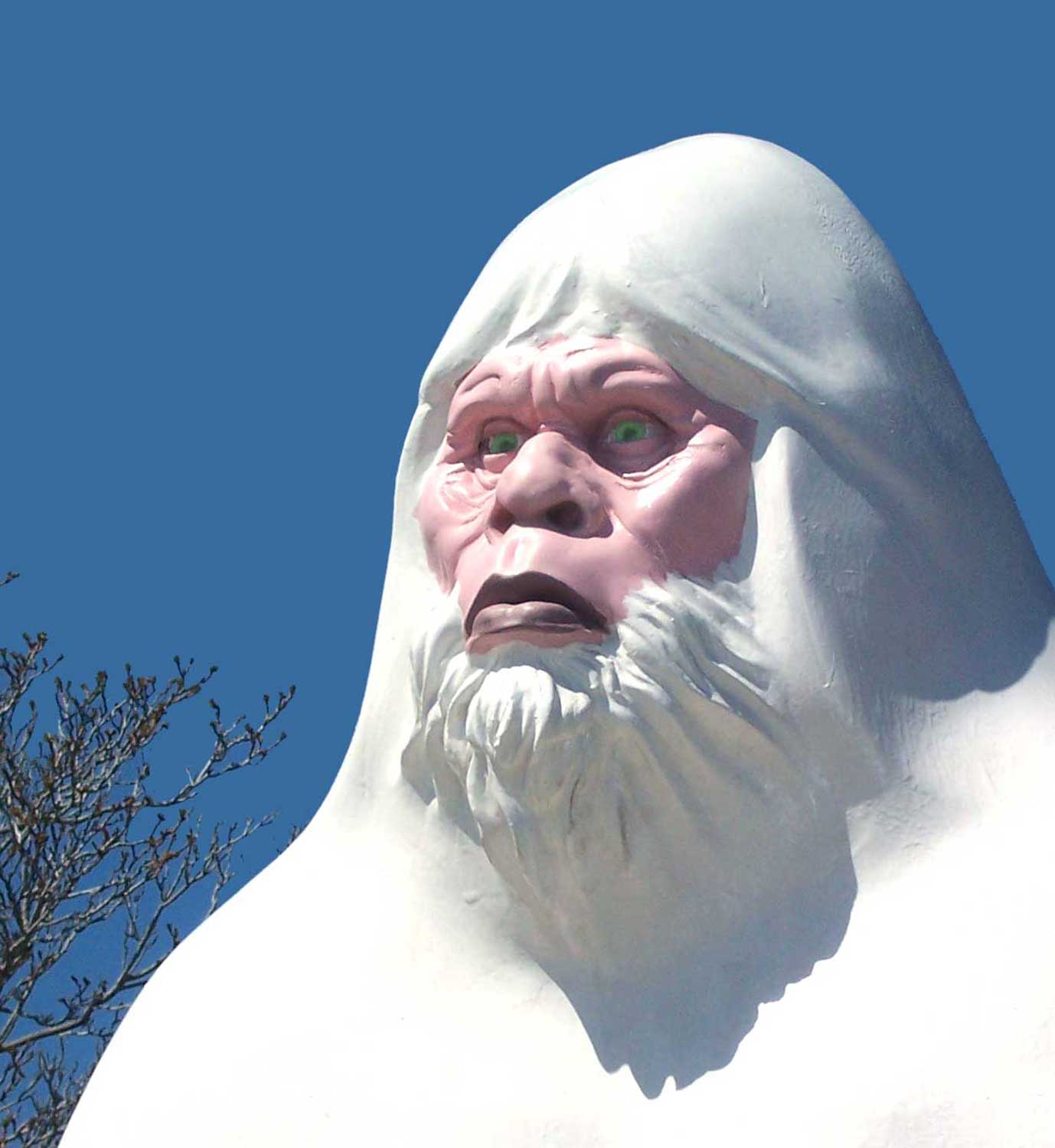
A 1959 U.S. Foreign Service Dispatch, made available through the national archives, outlines the regulations to be undertaken should anyone make an expedition to Nepal to go in search of the Yeti – the mythical ape like creature that legend says makes its home in the Himalaya. The document is dated June 22 and is signed by Ernest Fisk, who served as Counselor of the Embassy. This memo is also an addendum to the regulations governing mountaineering and scientific expeditions to the region.
Surprisingly enough, there are just three regulations to be observed in regards to those going in search of the Yeti. The first stipulation is that you have to purchase a permit from the government of Nepal for 5000 Indian Rupees before setting out on your expedition. That's roughly $108 by today's exchange rate, a relative bargain in terms of big game hunting.
Secondly, if you do manage to come across a Yeti, it can only be photographed or captured alive. It is forbidden to kill the legendary creature unless it is in self defense. Live specimens or photos of the beast are to be turned over to the Government of Nepal as soon as possible.
Finally, it is forbidden to share any news or reports substantiating the existence of the Yeti with the press without first receiving permission from the Government of Nepal. Any such reports should first be turned over to the government before submitting them to the press or a reporter.
Reading through this memo I got a chuckle out of the fact that it is a real document handed out by the U.S. government to anyone heading into the Himalaya looking for the Abominable Snowman. It makes you wonder what other memos are out there floating around, such as Regulations for First Contact with Alien Lifeforms or How to Approach a Sasquatch. Either way, I found it to be a fun and interesting slice of history.
Surprisingly enough, there are just three regulations to be observed in regards to those going in search of the Yeti. The first stipulation is that you have to purchase a permit from the government of Nepal for 5000 Indian Rupees before setting out on your expedition. That's roughly $108 by today's exchange rate, a relative bargain in terms of big game hunting.
Secondly, if you do manage to come across a Yeti, it can only be photographed or captured alive. It is forbidden to kill the legendary creature unless it is in self defense. Live specimens or photos of the beast are to be turned over to the Government of Nepal as soon as possible.
Finally, it is forbidden to share any news or reports substantiating the existence of the Yeti with the press without first receiving permission from the Government of Nepal. Any such reports should first be turned over to the government before submitting them to the press or a reporter.
Reading through this memo I got a chuckle out of the fact that it is a real document handed out by the U.S. government to anyone heading into the Himalaya looking for the Abominable Snowman. It makes you wonder what other memos are out there floating around, such as Regulations for First Contact with Alien Lifeforms or How to Approach a Sasquatch. Either way, I found it to be a fun and interesting slice of history.
Labels:
General Adventure,
Himalaya,
History,
Mountaineering,
Nepal
Friday, September 2, 2011
Climber With No Arms Sets Sights On Everest
According to this story from the Cochrane Eagle, a climber who is missing both of his arms will attempt to climb Everest next year. Sudarshan Gautam will take on the world's tallest mountain in an effort to raise funds for the Sam Sullivan Disability Foundation in Vancouver.
The 29-year-old Nepalese man, who now lives in Canada, lost both of his arms when he was just 13. He was flying a kite at the time, and when the kite became tangled in electrical wires, he attempted to free it by using a metal pole. The resulting electric shock severely damaged his limbs, which had to be amputated.
Since that time, he has learned to live his life without the use of arms or hands. He uses his feet for many of his daily tasks, such as writing, eating, or even steering a car. In 2005 he also climbed Yala Peak, a 5732 meter (18,805 ft.) mountain located along the border of Tibet and Nepal, using "his teeth, feet and a team of sherpas." Sudarshan calls that "training for Mount Everest."
The story doesn't go into much detail on what his climbing experience beyond Yala Peak is however. That mountain is a non-technical "walk-up" that is more than 10,000 feet shorter than Everest. I'm not sure hiking to the top of Yala, six years ago no less, constitutes good training for a far taller and more technical mountain like Everest.
Still, I wish Sudarshan luck. I'd admire his spirit and sense of adventure, plus his efforts are going to a good cause. He has other plans for further adventures as well. Upon his return from the Himalaya next year, he plans to drive across Canada using nothing but his feet, in a manual transmission now less.
The 29-year-old Nepalese man, who now lives in Canada, lost both of his arms when he was just 13. He was flying a kite at the time, and when the kite became tangled in electrical wires, he attempted to free it by using a metal pole. The resulting electric shock severely damaged his limbs, which had to be amputated.
Since that time, he has learned to live his life without the use of arms or hands. He uses his feet for many of his daily tasks, such as writing, eating, or even steering a car. In 2005 he also climbed Yala Peak, a 5732 meter (18,805 ft.) mountain located along the border of Tibet and Nepal, using "his teeth, feet and a team of sherpas." Sudarshan calls that "training for Mount Everest."
The story doesn't go into much detail on what his climbing experience beyond Yala Peak is however. That mountain is a non-technical "walk-up" that is more than 10,000 feet shorter than Everest. I'm not sure hiking to the top of Yala, six years ago no less, constitutes good training for a far taller and more technical mountain like Everest.
Still, I wish Sudarshan luck. I'd admire his spirit and sense of adventure, plus his efforts are going to a good cause. He has other plans for further adventures as well. Upon his return from the Himalaya next year, he plans to drive across Canada using nothing but his feet, in a manual transmission now less.
Tuesday, August 9, 2011
Controversy Surrounds Everest Expedition To Search For Irvine And The Camera
More than 87 years after their deaths on Everest, George Mallory and Andrew Irvine continue to cast large shadows over the mountain. For decades, historians have wondered whether or not Mallory and Irvine reached the summit of the mountain 29 years before Edmund Hillary and Tenzing Norgay. Either way, the two men died on the descent, and created a mystery of epic proportions that still inspires climbers and explorers to this day.
The discovery of Mallory's body, high on the mountain, back in 1999 has done nothing to clear-up the mystery. As expected, Mallory was not carrying the expedition's camera when he died, as that duty would have fallen to his teammate Irvine. There are some who believe that that camera is still on Irvine's body, where ever that may be, and that it could still contain the photos that will prove that the two men went to the summit.
Now, a controversial new expedition is being planned to go in search of Irvine's remains and the elusive camera. According to this story from The Guardian, American Everest enthusiast Tom Holzel is organizing a team to go to the mountain this December to look for the missing climber's body. Holzel believes that he has located Irvine, and hopefully the camera, using high resolution satellite images, and he will direct a squad of mountaineers to that location in anticipation of the find. He also believes that if he is correct, the discovery will spark a media frenzy over the find.
This expedition is expected to cost roughly $250,000 and will be filmed by the BBC. The plan is to go during the winter, when few teams are on the mountain, and locate the body without anyone else around. If they're successful, and they do find the camera, it could potentially bring an end to one of the biggest mountaineering mysteries of the 20th Century.
But not everyone thinks that that Holzel is handling the search in the best possible way. British climbing legend Chris Bonington has been critical of the expedition calling it "unsavory." He feels that the plan is trying to capitalize on the find and commercialize the search, with the hopes of making a profit off of the photos. He also feels that the mystery is best left alone and allowed to live as a legend in our minds.
Either way, it seems that the expedition will forge ahead later this year. Climbing Everest in December doesn't sound like it'll be the conditions for being on the mountain, and if Irvine's remains are located high up, they may never get close to him due to the weather conditions. Still, it seems there will be a clandestine team on Everest, looking to solve the mystery of Mallory, Irvine, and the Camera.
There are a lot of obstacles to their success however, and climbing the mountain is just one of them. They may get there and find that the body isn't even Irvine's at all. There is the chance that it isn't even a body, since they are using satellite imagery after all. And even if it is Irvine, he may or may not have the camera. And even if the camera is there, it could be broken, destroying the film inside.
Perhaps the mystery will live on, as it should.
Monday, August 8, 2011
Keeper of the Mountains: A Film About Elizabeth Hawley
Anyone who follows climbing in the Himalaya knows the name of Miss Elizabeth Hawley, the woman who keeps the definitive record of who climbed what mountain and who actually reached the summit. But not everyone knows Miss Hawley's story, which is why plans are in the works to create a documentary of her life.
A new film called Keeper of the Mountains is in the early stages of production and will chronicle Miss Hawley's journey around the world, eventually settling in Nepal, where she began her career chronicling the climbs of the big mountains there. That was 48 years ago, and she's been doing it ever since.
Back in mid-July, the filmmaker behind his project created a Kickstarter page to seek funding to complete the film. They reached their target goal, and are now ready to move ahead with producing the film. That page has more information about the project and Miss Hawley herself. You can also view the teaser trailer for it below.
Can't wait to see this one!
A new film called Keeper of the Mountains is in the early stages of production and will chronicle Miss Hawley's journey around the world, eventually settling in Nepal, where she began her career chronicling the climbs of the big mountains there. That was 48 years ago, and she's been doing it ever since.
Back in mid-July, the filmmaker behind his project created a Kickstarter page to seek funding to complete the film. They reached their target goal, and are now ready to move ahead with producing the film. That page has more information about the project and Miss Hawley herself. You can also view the teaser trailer for it below.
Can't wait to see this one!
Thursday, July 21, 2011
Nepal To Re-Measure Everest To End Dispute With China
The government in Nepal has requested that the height of Mt. Everest be re-measured in an attempt to gain a more accurate reading of its true height and to end a brewing dispute with China. For years, the official height of the mountain, as recognized by Nepali officials, has been 8848 meters (29,029 ft), but that measurement includes 4 meters of snow on top of the peak. China insists that the mountain should be measured sans snow, and they list the height as 8844 meters (29,015 ft).
Everest falls along the border between Nepal and Chinese controlled Tibet. Apparently, last year the two countries agreed to use the 8848 meter height while discussing border disputes between the nations, but the Chinese continued to use the lower height. In order to settle the dispute once and for all, Nepal has begun the task of re-measuring the mountain using sophisticated GPS devices. Measurements of the height will be taken at three different locations, and the entire process could take up to two years to complete.
It should also be noted that in 1999 an American team measured the height of Everest, using GPS equipment, at 8850 meters (29,035 feet). That is the same number that National Geographic uses in its publications and representations of the mountain. The new survey will be the first official measurement since that time, and since technology has increased in sensitivity and accuracy, it is likely that this will be the most accurate measure of the height of the mountain to date.
It should be interesting to discover what the survey teams find when they compile their data. Maybe we should start a pool now as to what the height will be.
Trekkers Complete First Thru-Hike Of Great Himalaya Trail
Two trekkers, Australian Greg Babbage and Brit Toni Wilson, have walked their way into the record books by becoming the first people to hike the length of the Great Himalaya Trail in Nepal end-to-end in a single season. The pair began their walk back in February and finished up just a few days ago, covering more than 1700km (1056 miles) in the process.
You can read all about Greg and Toni's adventure on TrekTheGreatHimalayaTrail.com, which is where they posted updates about their journey over the past few months. The duo began their excursion in the eastern part of Nepal, near Kanchenjunga and wandered west to Humla, in the Yari Valley, where the borders between Nepal and China meet. Along the way, they passed over 25 high mountain passes, reaching a maximum altitude of 6200 meters (20,341 ft) in the process. All told, the entire trek took 157 days to complete.
When it is completed, the GHT will be the longest and highest trekking route in the world, stretching for more than 4500km (2796 miles) from Nanga Parbat in Pakistan to Namche Barwa in Tibet. The proposed final route will pass through Pakistan, India, Nepal, Bhutan and Tibet, with the splendor of the tallest mountains on the planet as a dramatic backdrop.
For now however, the route across Nepal is the only section that is completely open for trekkers to hike, and Australian adventure travel company World Expeditions offers travelers the opportunity to take it on – either in sections or as one massive hike. The company is already organizing excursions for 2012, preparing a great trip for anyone looking for a Himalayan experience that is unmatched by any other trek through the region. If you have 157 days of vacation to burn, then I'd recommend you take this walk.
Labels:
Adventure Travel,
Great Himalaya Trail,
Himalaya,
Nepal,
Trekking
Tuesday, July 19, 2011
Everest 2011 Stats
The 2011 spring climbing season on Everest may be long over, but there are still some interesting facts about the various climbs on the mountain that are coming to light. This article, from The Economic Times, shares some of the numbers from this past spring as passed along to them from Ang Tshering Sherpa, the outgoing president of the Nepal Mountaineering Association.
According to the article, there were 156 climbers who went to the summit from the South Side of the mountain this past spring. Of those, 39 were Americans, the most of any single country. The U.K. came in second with 27 summitteers, and India was third with 19. Those climbers were spread out over 92 separate expeditions, which was down from the 100 teams that received permits last year. We had heard that Base Camp was quieter this year, and those numbers seem to confirm it. All told, there were 506 ascents of the mountain, with 375 coming from the Nepal side and a further 131 from Tibet's North Side. The article also gives a tip of the hat to Apa Sherpa, who we all know summitted for a record 21st time.
The Economic Times is an Indian newspaper, and as a result they also share the accomplishments of their countrymen, which were quite impressive this spring. For instance, Haryana, Bikash Kaushik and Sushma Kaushik are a husband and wife team who summitted together, becaming the youngest couple in the world to accomplish that feat. They are 24 and 27 respectively. The Indian military reached a milestone as well when Flight-Lieutenant Nivedita Chaudhary became the first female Air Force officer to summit. She was joined on top by Anshu Jamsenpa, described as a "housewife," who became the first Indian woman to summit Everest twice in a single year.
The article also puts into perspective exactly what the spring climbing season means to Nepal, as it states that the government there earned $2.38 million in revenue from the permits and taxes that come along with climbing in that country. It is also estimated that the climbing season had an economic benefit of $9 million for the country as a whole as well.
Friday, July 8, 2011
Climbing Makalu Video
This past spring, First Ascent climbing guides Dave Morton and Melissa Arnot made an attempt on Makalu, the fifth highest mountain in the world at 8481 meters (27,825 ft). While their bid for the summit ultimately fell short, this video captures their experiences on the mountain quite nicely, and makes for a great end of the week post. Enjoy!
Makalu from David Morton on Vimeo.
Tuesday, July 5, 2011
Trekking The Great Himalaya Trail
In terms of long distance trekking, the relatively newly established Great Himalayan Trail is tough to beat in terms of challenge and beauty. The GHT is made up of a collection of existing treks that have been linked together to make one massive hiking experience, and once it is completed, trail organizers hope that it will span Bhutan, Tibet, India, Nepal and Pakistan.
For now however, the one section of the GHT that is officially open and accessible is the leg that runs across Nepal. That trail was recently thru-hiked by two Americans, Shawn Forry and Justin Lichter, who covered the 1700km (1056 mile) in 57 days, going unsupported and self-guided the entire way. Shawn was recently interviewed about their adventure at GreatHimalayaTrail.org.
In the interview, Forry talks about their inspiration for hiking the GHT, the route they took along the way, and his favorite section of the trail. He also discusses the most challenging sections of the trail, how the GHT compares to other big hikes, and a lot more. It is quite an interesting read for anyone considering a trek in the Himalaya, either along the GHT or elsewhere.
Of course, I'd absolutely love to return to the Himalaya for another trek, and the GHT would be high on the list. I'm not sure I'd want to do it in just 57 days however, as I'd prefer a more relaxed pace with plenty of time to enjoy the scenery and culture. Still, it seems that Shawn and Justin had an amazing adventure in Nepal.
Big thanks to Rick from Best Hike for sharing this great story.
Labels:
Adventure Travel,
Great Himalaya Trail,
Hiking,
Himalaya,
Nepal,
Trekking
Friday, June 17, 2011
Himalaya 2011: Lhotse Ski Descent Video Dispatch 5
The fifth, and final, video dispatch of the North Face Lhotse Ski Expedition that went down in the Himalaya this spring has been released. This video starts with the team at Camp 3 and then follows them up the mountain to C4, where the route up Everest and Lhotse diverges at last. Unfortunately, while in Camp 4, one of the team members takes ill, and the plans for the expedition change. Watch the video below to see how everything played out.
Wednesday, June 15, 2011
Communicating From The Far Corners Of The World
We are living in an amazing age. Technology continues to evolve at an astounding rate, and our methods of communications, even from remote places, has turned the planet into one giant global neighborhood. The ability to share our adventures, even while in the field, has changed our perception of exploration, as we are now able to stay in constant contact with explorers that are pushing the boundaries of what we thought was possible. Now days, it seems strange when an expedition sets off without having some form of communications back to the world, which is what makes a blog like this one possible.
Yesterday, Explorers Web posted a story written by Seth Wolpin, a climber who recently summited Everest. In the article, Seth discusses the various communications tools that are now available to mountaineers on their expedition and gives some great information on what he used during his climb.
As we all know, Everest received a major upgrade this year with the inclusion of 3G cell service that, when working, actually reached all the way to the summit. The cell tower for the service was built in Gorak Shep, and powered by solar panels, and when early season clouds covered the region, the tower wasn't functional for much of the time. Thankfully, good old semi-reliable satellite phone service still operated when necessary.
Seth's article is both practical and functional as he lays out the tools that he used on his expedition. He discusses options for both voice and data, and applies it to use in cell phones, sat phones, laptops, and more. He shares tips on pre-paid services, texting, sending e-mail, and setting up a data connection on a computer. If you're a tech oriented person, a lot of this will likely seem like old hat, but if you're not as technologically adept, you'll probably learn quite a bit, and much of this can be applied to your next adventure in the field as well.
In the future, I suspect data connections will continue to get faster and more reliable, and we'll probably see those connections become the primary method of communications from Everest Base Camp and beyond. Who would have thought even a few year ago that a device like the SPOT Connect would allow us to use our smartphones to send texts and other data from just about anywhere on the planet. Expedition communications gear is really evolving quickly, and it is changing the nature of extreme adventures along with it.
Labels:
Expedition,
Exploration,
General Adventure,
Mount Everest,
Nepal,
Technology
Thursday, June 9, 2011
Himalaya 2011: Alan Arnette Shares His Everest Experience
The 2011 Spring Climbing Season may be over, but we're continuing to get information about the events that unfolded in the mountains over the past few months. Take for example a pair of recent blog posts from Everest summitteer Alan Arnette, who completed the third leg of his Seven Summits for Alzheimer's project when he stood on top of the world's tallest peak.
The first blog post, published a couple of days back, is an excellent recap of the gear that Alan used on his Everest expedition, beginning with the trek to Base Camp and continuing all the way to the summit. He talks about the items he used while living in BC for weeks at a time and on his various acclimatization rotations as well. For some of you, this will probably be old hat, but for those who aren't aware of all the items that are used on this type of climb, it is a very revealing read. Definitely recommended for those who like their gear!
For an even better read however, you'll want to take a look at Alan's final expedition report, during which he talks about the climb in much more detail. You will find an introductory blog post, published just this morning, and a link to a PDF document that actually contains the report itself. As you would expect from Alan, the document is very well written and detailed, with plenty of information for those interested in an Everest climb in general and Alan's story specifically.
With Mt. Vinson, Aconcagua, and now Everest under his belt, Alan will next turn to Denali in his quest to complete the Seven Summits. Expect regular dispatches from that expedition as well, as he sets his sights on the highest peak in North America, a mountain he is also quite familiar with.
Great work on these reports Alan. Good luck in Alaska!
Labels:
Denali,
Himalaya,
Mount Everest,
Mountaineering,
Nepal,
Seven Summits
Wednesday, June 8, 2011
Himalaya 2011: Spring Season By The Numbers
Earlier today, ExWeb posted an excellent re-cap of the 2011 Spring Himalaya climbing season, breaking down all the stats and records, while putting it all into perspective for us. They have the scoop on the highs (pun intended!) and lows of another very busy spring in the mountains.
Amongst the stats that may be of interest is the fact that there were, according to ExWeb's count, roughly 680 summits in the Himalaya this year. Of those, about 500 took place on Everest alone. Remember, this is in a year that was said to be quieter than normal. That is a much higher number than what I had been led to believe, but the folks over at Explorers Web are bit more tapped in on those kinds of numbers, so I'm inclined to believe them. The remaining 180 summits were spread out across a variety of peaks, but of the 8000 meter mountains, nine saw successful summits, including Everest, Kangchenjunga, Lhotse, Makalu, Cho Oyu, Dhaulagiri, Manaslu, Annapurna, and Shisha Pangma.
Most of the post is made up of a list of "firsts," which include the first summits on a variety of peaks by climbers from specific nationalities, as well as age records for the youngest and oldest to scale some of these mountains as well.
Finally, the post wraps things up on a solemn note with a run down of the climbers who lost their lives in the Himalaya this spring. That list is always too long, no matter the number on it, and is a sobering reminder of the dangers we all face when going to high altitude.
Labels:
Annapurna,
Cho Oyu,
Dhaulagiri,
Himalaya,
Kangchenjunga,
Lhotse,
Makalu,
Manaslu,
Mount Everest,
Mountaineering,
Nepal,
Shisha Pangma,
Tibet
Monday, June 6, 2011
Himalaya 2011: Edurne Pasaban Shares Details On Lhotse Rescue
In the numerous Himalaya climbing updates I've posted over the past few months, I've made mention a couple of times of the rescue of some Spanish climbers on Lhotse following a harrowing descent of that mountain. One of the climbers who aided in that rescue was Edurne Pasaban, who has shared more details of the incident with the National Geographic Adventure Blog.
Edurne, who is one of the top mountaineers in the world, had gone to the Himalaya to climb Everest once again, this time without oxygen. But the weather wasn't cooperating, and high winds and cold temps were making that attempt very challenging. The window for a successful summit narrows greatly when you're going up with out the O's. Pasaban, and her team, elected to back off from their summit bid and wait for a better opportunity, which ended up never appearing.
While down in Base Camp, the word came in that there was trouble on Lhotse, and some climbers had run into trouble while making their way back down from their own summit bid. It turns out, they were Spanish climbers who happened to be friends with Edurne, who hails from the Basque region herself. Without hesitation, she joined the rescue team that was being organized, and went back up the mountain to help out her friends and countrymen.
It took another two days before the rescue was fully completed, and the tale of what happened is a dramatic one. For those who haven't already read the story, I recommend giving it a look, as it is not only a story of the challenges of the mountains, but also the camaraderie that comes along with the "Brotherhood of the Rope."
By the way, this is a reprint from a dispatch that was sent to Edurne's blog a few weeks back, but it may have slipped under the radar when it was originally published. After all, back then there were a ton of updates coming from the region as climbers all scrambled for their chance to stand on top of Everest and the other big peaks.
Labels:
Himalaya,
Lhotse,
Mount Everest,
Mountaineering,
Nepal
Friday, June 3, 2011
Himalaya 2011: Left For Dead On Kangchenjunga
Another story that broke out of the Himalaya in the past few days has been the odd and sad tale of Cleo Weidlich, who became the first American woman to summit Kangchenjunga a few weeks back. On her descent however, Cleo began running into trouble, and ended up being left behind by her Sherpas team, and had another Sherpa extort money out of those trying to help her just for an extra bottle of oxygen.
You can read the entire sordid affair at the Climbing Blog over at About.com, but the gist of the tale is this: While descending Weidlich started to lose her eyesight and complained of pressure on her eyes. Things got worse from there when she tore a ligament high on the mountain, but was still able to make it down to Camp 4, located at 24,600 feet. After spending the night there, she reportedly started acting irrationally, which led the Sherpas to believe that she was suffering from cerebral edema as well.
The lead Sherpani called for a helicopter rescue, but because of where she was located at the time, it was determined that Cleo would have to descend further before that could happen. By that time, other western climbers had joined in the rescue attempt, but reports seem to indicate that the behavior of the Sherpas was not what one would expect on an expedition of this level. There are accusations of abandonment, reckless behavior, and extortion.
Fortunately, the woman lived, but mostly thanks to other climbers who came to her aid. Were it not for their help, it seems that Cleo would have been left behind to die, all alone on Kangchenjunga. I encourage you to read the entire, scary tale, by clicking here.
Himalaya 2011: Lhotse Ski Descent Video Dispatch 4
The 2011 spring climbing season in the Himalaya may be over, but we're still getting all kinds of news and dispatches from the region. One of the best I've seen is the video below that comes our way courtesy of the North Face Lhotse Ski Expedition, a team that climbed and made a ski descent of that mountain.
In this video, we catch the team moving up the Lhotse Face and making their first turns on the mountain. It also shows the rigors of making a high alpine expedition, with team members losing their lunch, working hard to catch a breath, and suffering in the weather. There is lots of great footage to be seen here, and well worth a look for fans of high altitude climbing.
Thanks to The Goat for sharing this one. Much appreciated!
In this video, we catch the team moving up the Lhotse Face and making their first turns on the mountain. It also shows the rigors of making a high alpine expedition, with team members losing their lunch, working hard to catch a breath, and suffering in the weather. There is lots of great footage to be seen here, and well worth a look for fans of high altitude climbing.
Thanks to The Goat for sharing this one. Much appreciated!
Thursday, June 2, 2011
Himalaya 2011: Wrapping Things Up
While I was away in South America, the spring climbs pretty much wrapped up in the Himalaya. Now, the monsoon looms, and with its arrival, comes plenty of rain and wind, which will shut off the big peaks in Nepal and Tibet until the fall. And while the final weather window on Everest didn't last as long as was hoped, and many climbers had their dreams dashed, there were a few notable climbs that I wanted to highlight, even though it has been some time since they were completed.
For starters, major congratulations to 16-year old George Atkinson of the U.K. Not only did George summit Everest, he also became the youngest person to complete the Seven Summits, which is a very impressive accomplishment. The young man was three days shy of his 17th birthday when he stood on top of the world, climbing from the North Side of the mountain. Hopefully he celebrated both the climb, and the birthday, at the Rum Doodle back in Kathmandu.
Meanwhile, a team of female air force officers from India also reached the summit of Everest from the South Side of the mountain. The team consisted of eleven climbers, three of which successfully stood on the top of Everest. The women trained for the past two years to prepare for this expedition, knocking off a string of summits that included Mt. Stock Kangri and Mt. Saser Kangri.
The Indian ladies weren't the only women making history on Everest. Forty-year old Suzanne Al Houby of the United Arab Emirates became the first Arab woman to summit the mountain as well, when she reached the top on May 21st from the South Side. She has now completed five of the Seven Summits, in her bid to become the first Arab woman to complete that quest as well.
Things didn't work out quite so well for Ueli Steck however. As you no doubt recall, he was attempting to climb three 8000-meter peaks in the Himalaya this spring, and seemed nearly unstoppable after finishing off Shisha Pangma and Cho Oyu in rapid succession. Ueli's bid on Everest didn't go as planned however, and the Swiss climber was forced to turn back 100 meters below the summit on the North Side. You can read his full account of the attempt on his website.
It was another successful season for the Sherpas working to clean up Mt. Everest as part of the Save Everest Campaign. Apparently, the group brought more than eight tons of waste down from the mountain, with much of that being deposited in Namche Bazaar, but a lot is being taken back to Kathmandu as well. There were 29 Sherpas involved in the effort, and they estimate that another 20 tons of garbage still covers the mountain.
Finally, this story has the tale of the tape on Everest this season saying:
"A total of 169 people from 42 teams scaled the world’s tallest peak between May 5 and May 27, while two foreigners and one Nepali died while trying to make it atop, according to statistics at the Mount Everest Base Camp. Two climbers have lost their fingers to frostbite, while 10 have been sent to Kathmandu for treatment. A woman from Taplejung has scaled the peak twice."Seems like a rather small number compared to the past few years, but then again, we knew early on that Base Camps on both sides of the mountain were quieter than normal. Not sure if that trend will continue, but at least for this season, the mountain wasn't over crowded.
Now on to the Karakoram summer season ahead...
Labels:
Himalaya,
Mount Everest,
Mountaineering,
Nepal,
Tibet
Wednesday, May 25, 2011
Himalaya 2011: Lhotse Ski Descent Video Dispatch 3
Have you ever wondered what life is like in Base Camp during one of these big Himalayan expeditions? You can get a sense of it in the video below, which follows the North Face Lhotse Ski team as they go about their daily lives in BC while waiting for an opportunity to climb the mountain, and ultimately make a descent on skis. Watching this video will either have you better prepared for this type of expedition experience or have you swear it off altogether. Enjoy!
The North Face®: Lhotse Ski Expedition Dispatch THREE from Camp 4 Collective on Vimeo.
Himalaya 2011: Another Notable Summit, Another Climber Passes Away On Everest
Yesterday brought both more good and bad news from Everest, where teams on both sides of the mountain are still working their way to the summit ahead of the arrival of the monsoon, which is likely just a few weeks away at this point.
First, we have a summit of note, as climbers Richard Parks and Steve Williams reached the top of the mountain while climbing with the Jagged Globe squad. For Parks, this marks a major milestone in his "737 Expedition" during which he is attempting to reach the "three poles" and complete the Seven Summits in just seven months. Everest has often been called the "third pole" and by topping out on the mountain, Parks has now visited the three poles, having gone last degree to the North and South, and has finished off five of the seven summits as well. He now has just Denali and Elbrus standing in his way of becoming the first person to visit the three poles and seven summits in a single calendar year. (Thanks to Alan Curr for sending this my way!)
While some climbers continue to pursue their dreams of standing on the summit of Everest, others have decided to call it a season and head home. Amongst them are Edurne Pasaban, who hoping to summit without supplemental oxygen, but turned back at Camp 4 over the past weekend due to high winds and the poor health of two of the team's Sherpas. On the descent, Edurne and her team provided aid to the Spanish climbers who were in trouble on Lhotse, and the efforts to climb and assist in the rescue, have left them exhausted and unable to continue. Pasaban provides details on what turned out to be a very long two days on the mountain in a blog post you can read here.
Alan Arnette has arrived back in Lukla, and is preparing to head out to Kathmandu tomorrow and catch a flight home on Friday. He posted a great blog entry today in which he answers a number of questions about climbing Everest. It is an excellent read for those looking for more information about what goes into such a climb.
Finally, sad news from Everest, as we have received word that Irish climber John Delaney passed away on the mountain while climbing with the 7 Summits Club last weekend. He apparently ran into trouble at about 8800 meters and fell behind the summit team, passing away shortly there after. Condolences to his friends and family.
Labels:
Himalaya,
Mount Everest,
Mountaineering,
Nepal,
Tibet
Subscribe to:
Posts (Atom)