Yesterday I posted a story about the first ascent of Saser Kangri II that was completed by Steve Swenson, Mark Richey, and Freddie Wilkinson a few weeks back. It turns out, the boys weren't the only ones have some fun in the Karakoram this summer, as Kirsten Kremer, Emillie Drinkwater, and Freddie's wife, Janet Bergman, were also on hand to get in on the action.
Bergman posted a trip report on the Hardwear Sessions Blog a few days back detailing their climbs. She, and the other two ladies, traveled with the Saser Kangri II team to Base Camp before both squads went their separate ways to take on several unclimbed peaks. The girls focused their attention on a mountain that they simply called "6135," which happens to be its height in meters. That's 20,127 feet for those keeping track at home.
The team made two attempts to climb the unnamed mountain, but to no avail. Janet reports that the climbing was good, albeit challenging, but while they were on the face and the sun was out, they were continually bombarded by falling rock and ice. After a few days of those conditions, they decided that it was not safe to continue up the mountain, so they elected to return to Base Camp and look for other challenges.
They found those challenges on Pumo Kangri (6440 meters/21,128 ft), which Kirsten and Emillie climbed, and Saser Linga IV(~6200 meters/20,341 ft). In early August, the ladies were joined by Mark and Freddie for a climb up Stegosaurus, a 6640 meter (21,785 ft) mountain that features spiked ridges not unlike the back of the dinosaur from which it derives its name.
You can read more and check out some photos on their blog post, found here. Sounds like a pretty great way to spend most of your July and August. Congrats to the team.
Showing posts with label India. Show all posts
Friday, September 9, 2011
First Ascents In The Indian Karakoram
Thursday, September 8, 2011
Climbers Make First Ascent Of Saser Kangri II
Three American climbers have successfully topped out on Saser Kangri II, the second highest unclimbed peak in the world. According to the Hardwear Sessions Blog, the trio began their ascent on August 21st and reached the summit on the 24th, returning to Advanced Base Camp the following day.
The team consisted of American Alpine Club President Steve Swenson, Mark Richey, who is a past president of that organization, and Mountain Hardwear athlete Freddie Wilkinson. The three men traveled to a very remote region of northern India to make the climb up the 7518 meter (24,665 ft) peak which features a 1700 meter (5577 ft) face that is extremely technical in nature.
The team did receive a major scare however, as Swenson suffered a severe sinus infection during the ascent. That infection turned into a major respiratory ailment that required that he be airlifted from the mountain on August 26th. Steve ended up spending a few days in the hospital while Mark and Freddie packed their gear and trekked out the traditional way, rejoining him in the town of Leh on the 30th.
Saser Kangri II was one of the last major unclimbed peaks in the world and is a significant accomplishment for Swenson, Richey, and Wilkinson. The highest peak, Gangkhar Puensum, is located in Bhutan and stands 7570 meters (24,836 ft) in height. That mountain is likely to remain unclimbed, at least for the foreseeable future, as it is deemed a holy place, and climbing is strictly forbidden by the Bhutanese government. The new "second highest unclimbed" mountain is Labuche Kang III, located in Tibet, not far from Cho Oyu. That peak is 7250 meters (23,786 ft) in height.
Congrats to Steve, Mark, and Freddie on a job well done. If you'd like to read more about their expedition, Steve is posting excellent post-climb reports on his blog, which can be found here. Also, check out the video below of Wilkinson sharing thoughts on the climb.
Labels:
Hindu Kush,
India,
Mountaineering,
Saser Kangri,
Video
Sunday, September 4, 2011
Gibson Guitar vs. The Obama Regime
By Findalis of Monkey in the Middle
Since 2009 Gibson Guitars, one of the leading manufacturers of guitars has been persecuted by the Obama Administration over "tainted wood". It seems that some of the wood that Gibson uses is manufactured in a way that violates India's laws. Yes I did write INDIA. The country. Not Indiana, the state.
During the Clinton Administration this type of investigation and misuse of power was a regular occurrence. To Barack Hussein Obama this is just normal Chicago Politics. To the American people this is just wrong. It is time to call your Congressman, your Senator. How many more American jobs will Sheik Obama send overseas?
Since 2009 Gibson Guitars, one of the leading manufacturers of guitars has been persecuted by the Obama Administration over "tainted wood". It seems that some of the wood that Gibson uses is manufactured in a way that violates India's laws. Yes I did write INDIA. The country. Not Indiana, the state.
Last week, heavily armed federal agents raided two guitar manufacturing facilities in Tennessee owned by Gibson — one in Nashville, another in Memphis. The feds were not acting on a tip that an al Qaeda cell was holed up in the buildings; or that Mexican drug cartel gangs were lurking inside. It was actually something far more serious; far more serious, that is, to a bunch of federal bureaucrats with nothing better to do.It is just coincidental that Gibson Guitar Chairman and CEO Henry Juszkiewicz has been a donator to Republican candidates and not to Barack Obama's election or now his reelection. Mr. Juszkiewicz was informed by the government that they would drop all the charges against his company and return the property that was seized if he moved his production plants to Madagascar. That means 500 American jobs destroyed and lost to an overseas company. Thus we witness Obama's jobs program in true action. Creation of jobs not here at home, but abroad. Just don't take my word for it, but listen to Henry Juszkiewicz himself:
The raids were carried out because the Department of Justice and the U.S. Fish and Wildlife Service claim that parts of the iconic guitars manufactured in the plants contained the wrong kind of imported wood. And, although the feds have not made clear to Gibson just what it has done wrong, the government appears also to be claiming the guitar parts might have been exported to the U.S. contrary not to American laws, but to certain domestic laws of the countries exporting the parts to the United States!
One of the laws at play here is the hundred-year old Lacey Act, passed during the “Progressive Era,” and intended to promote conservation and as a crackdown on illegal trafficking in wildlife. The law also makes it a crime for a company to violate the laws or regulations of other countries. In this particular case, Gibson’s attorneys surmise it may be the law of India they are charged with misinterpreting or violating.
The Justice Department apparently believes the wood in question, used to construct fret boards for Gibson’s popular instruments, was imported from India without having first been “finished” by Indian workers; actions that could be considered a violation of that country’s byzantine legal code.
According to a press release from Gibson, the agents “seized several pallets of wood, electronic files and guitars.” Juszkiewicz estimated the loss of raw materials alone to be $1 million; obviously not including financial losses due to the inability to produce guitars from those materials.
Unfortunately, this is not the first time Gibson has been subjected to the overreaching, punitive arm of the federal government. In 2009, the Nashville facility was raided in similar fashion, based on accusations that rosewood imported from Madagascar and used in guitars, came from illegal logging. And, despite the fact that to this day, the government has not filed formal charges against Gibson, it has refused to return the company’s property.
Gibson has engaged in extensive and costly efforts to recover its property from that raid two years ago; including the filing of a civil lawsuit. In the civil proceedings, the company presented proof, including statements from the Madagascar government, that the wood was obtained legally. Still, the federal government refuses to budge; and now, with these second and third raids, appears intent on trying to put Gibson out of business completely.
These highly publicized actions by the federal government have ramifications for any musician owning a guitar made out of certain woods by overzealous federal agents of having been obtained illegally at some point in the manufacturing process (even if years ago and by a prior owner or manufacturer). The Wall Street Journal notes that owners of vintage guitars made out of now-banned or regulated woods had “better have correct and complete documentation proving the age of the instrument. Otherwise, you could lose it to a zealous customs agent – not to mention face fines and prosecution.”
Gibson’s obviously frustrated CEO, who noted during a press conference the day of the raid that every guitar his company builds could possibly be considered criminal in nature, given the widely disparate countries from which the various woods are imported and in various states of manufacture; and considering the difficulty – if not impossibility – of correctly interpreting every relevant law of every one of those countries.
The government’s treatment of this American company – one of the few bright spots in domestic manufacture of musical instruments – is disgraceful, counterproductive, and mean-spirited.
In 2000, Charlton Heston, then serving as president of the National Rifle Association, and fighting gun control proposals, held a flintlock rifle over his head and declared famously, “from my cold dead hands.” Gibson’s CEO needs to rally freedom-loving Americans similarly; raising a Les Paul Gibson guitar over his head. All Americans who believe in freedom and limited government should come to Gibson’s defense; not just those who are guitar players.
Source
DTRT Radio Gibson Guitar Chairman and CEO Henry Juszkiewicz 09/02 by CP n Annieb | Blog Talk Radio
During the Clinton Administration this type of investigation and misuse of power was a regular occurrence. To Barack Hussein Obama this is just normal Chicago Politics. To the American people this is just wrong. It is time to call your Congressman, your Senator. How many more American jobs will Sheik Obama send overseas?
Labels:
Barack Hussein Obama,
Gibson Guitars,
India,
The Obama Regime
Wednesday, July 6, 2011
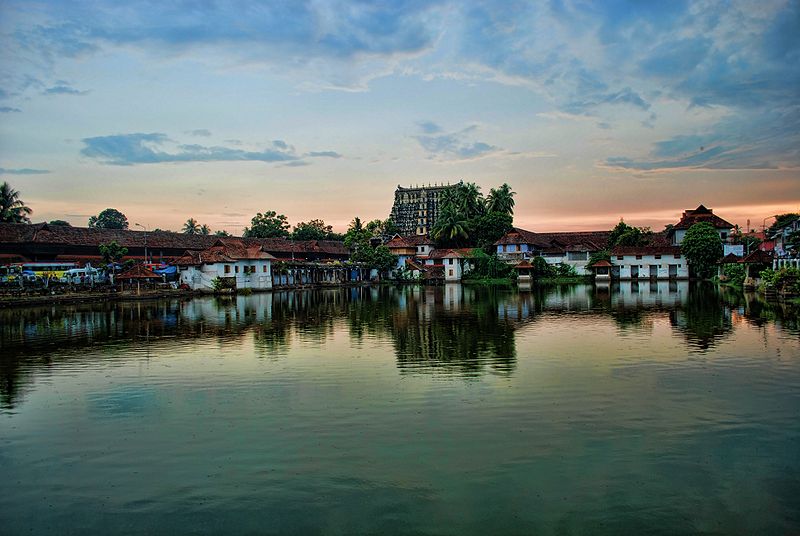
$22 Billion Treasure Found In Indian Temple
I caught this story from the Associated Press earlier and thought it was fascinating. The AP is reporting that a treasure trove, worth in excess of $22 billion, was discovered in temple in India, and that discovery has sparked a public debate on what to do with the riches.
The whole story begins with a lawyer in India expressing concerns about the lax security at the popular Sree Padmanabhaswamy Temple, located in the southern region of the country. It was believed that there were valuables stored in a series of six vaults under the Hindu shrine, but since they hadn't been opened in over 150 years, no one was exactly sure what was inside. The Supreme Court ordered that the vaults be opened, and it's contents inventoried but they had no idea what they would find. When the seals were broken, there were chests of gold coins, jewel encrusted statues, ancient works of art, and more. With five the vaults now opened and inventoried, the value of the treasures is conservatively estimated to be worth $22 billion.
Built in the 16th century, the temple has been receiving pilgrims for centuries. Those worshippers would arrive bearing gifts for the temple, and for decades those items were simply placed in storage and eventually were forgotten. The temple is has been maintained by the Travancore Royal Family for most of its history, and they are now trying to prevent the treasures from being taken from the holy site, but many feel these artifacts deserve to be in a museum and on display for everyone to see.
The debate over what to do with the treasure trove is expected to go on for some time. The artifacts do belong to the temple, which has made it one of the richest religious sites in the world entire world, but the items in the find are also reportedly of cultural significance, which makes them prime for sharing in museums as well. Whether or not that happens, and how the temple is compensated, remains to be seen.
I think it is amazing that all of these treasure were sitting in a vault under the building for centuries, completely unknown to those living and worshipping there. I would have loved to have seen the faces of the team that opened the first vault, and viewed those treasures for the first time. It has to be an amazing scene.
Friday, July 1, 2011
Mountain Hardwear Summer Expeditions
Earlier in the week, Mountain Hardwear announced a host of expeditions for the summer, with a number of climbers heading off to the Karakoram to take on some of the big peaks there. The gear company has some excellent sponsored athletes under its banner, and has always been ready to help them go after some big goals. Here's a few of the things they have planned in the weeks ahead:
Saser Kangri II: Freddie Wilkinson, along with Mark Richey and Steve Swenson, will make an attempt on the second tallest unclimbed peak in the world – Saser Kangri II. The peak, which is located in northern India, is 7513 meters (24,648 feet) in height and remains one of the last major challenges in the Himalaya. Richey and Swenson attempted to climb the mountain back in 2009, and return for another go. The team is hoping to make history.
K7 West: Climbers Pat Goodman, Will Meinen, and Matt McCormick have set out for Pakistan where they'll be attempting to make the first ascent of the 6200 meter (20,341 foot) southwest pillar of K7 West. The team will go light and fast, alpine style, up the new route, and hopefully reach the summit in just four days.
First Ascent In India: Mountaineers Janet Bergman, Emilie Drinkwater and Kirsten Kremer will attempt a first ascent of an unnamed peak along the borders of India and Pakistan. The ladies also hope to make the climb in an alpine style, making a single push to the summit.
Exploring The Russian Arctic and Climbing in Afghanistan: Moving away from the Karakoram, Mike Libecki will begin his summer with a journey to the remote island of Franz Josef Land, where he plans to climb several big walls. He'll travel to his destination by sailboat, then explore by ski and kayak to find some major climbing challenges.
When he's done in the Arctic, Mike will then travel to Afghanistan where he'll attempt to climb the Ibex Horn, a 3000-foot tall tower that he discovered while scouting the Koh-e-Baba Mountain Range in the Bamyan province last year. If successful, this will be the first ascent of that rock pillar as well.
Good luck to all of these expeditions. It seems like its going to be a very busy and adventurous summer.
Labels:
Afghanistan,
Climbing,
India,
Mountaineering,
Pakistan,
Russia
Thursday, June 16, 2011
Karakoram 2011: A New Season Begins
With the 2011 Himalaya climbing season now officially in our rear view mirror, it is time for the world's top climbers to start focusing on the Karakoram and the challenges that come along with climbing in that range.
Stretching across Pakistan, India, and China, the Karakoram range contains some of the most challenging peaks on the planet. It is home to one of the highest concentrations of mountains found anywhere as well, which makes it a popular summer mountaineering destination, which is about the only time of the year that the weather is good enough to allow safe climbing. Amongst the coveted summits in the Karakoram are Broad Peak, Nanga Parbat, the Gasherbrums, and of course, the infamous K2.
ExWeb has an early season report posted that takes a look at some of the more interesting expeditions set to take place in the Karakoram this year. Amongst them are Christian Stangl, who returns to K2 seeking redemption after last year's debacle. You may recall that last year, Stangl fabricated a summit photo and made a false claim to having reached the top of the mountain. Hopefully he'll be able to top out this year, and put that whole affair behind him.
Gerlinde Kaltenbrunner is also heading to K2, although she'll be climbing from the North Side. Gerlinde has attempted K2 several times in the past, and so far the summit has remained elusive. She hopes to change that this year, and by doing so, complete her final 8000 meter peak.
It seems that there are a number of teams gearing up for Gasherbrums I and II, including Gerfried Göschl, Kari Kobler, and Ueli Steck, who comes off the spring with two successful summits in the Himalaya, and a bit of a disappointment on Everest. In fact, it seems thats where the early climbers are headed first, as ExWeb reports that one of the Gasherbrum teams has already met in Skardu (Pakistan) and is preparing to begin the trek to Base Camp, while another is already en route. That second team has two female climbers, Aleksandra "Ola" Dzik of Poland and Ukrainian Maria Khitrikova, who will attempt the first female double header of both GI and GII.
The Karakoram season is just gearing up, so expect lots of news from the region in the days ahead. The big question this year is whether or not someone will finally summit K2 again. It has been nearly three years since someone stood on top of that mountain.
Labels:
Broad Peak,
China,
Gasherbrum,
India,
K2,
Karakoram,
Nanga Parbat,
Pakistan
Tuesday, June 7, 2011
Hitting The Road With "A Sense Of Adventure"
Have you ever wanted to take an epic road trip that covered thousands of miles and offered you an opportunity to truly explore the region you were traveling through? That's exactly what Rupert Grey hopes to do in September, when he and his wife will set out to drive from Bangladesh back to their home in England. But Rupert doesn't just want to just go on a road trip, he wants to do it in style. Which is why he is making the journey in his classic 1936 Rolls Royce.
Independent film company Rover Films is hoping to make a documentary of the drive, following Rupert and his wife out of Bangladesh, into the Himalaya, and westward along the Arabian Sea, through Iran and Turkey, and beyond. You can check out the trailer for the film below, and if you feel inclined, donate to the cause for getting this movie made. Rover has set up a Kickstarter page to take donations to help fund the project, which looks like it should be a good one. I mean, where exactly do you find parts for a 1936 Rolls Royce while rolling through the Himalaya?
This looks like a fantastic travel experience, and as I've mentioned before, I'd love to do a long distance, overland road trip like this with friends. My road trip of choice would be Cairo to Cape Town, but his looks like a great route as well. I hope the gang over at Rover get the opportunity to make their film!
A Sense Of Adventure OFFICIAL TEASER from Rover Films on Vimeo.
Independent film company Rover Films is hoping to make a documentary of the drive, following Rupert and his wife out of Bangladesh, into the Himalaya, and westward along the Arabian Sea, through Iran and Turkey, and beyond. You can check out the trailer for the film below, and if you feel inclined, donate to the cause for getting this movie made. Rover has set up a Kickstarter page to take donations to help fund the project, which looks like it should be a good one. I mean, where exactly do you find parts for a 1936 Rolls Royce while rolling through the Himalaya?
This looks like a fantastic travel experience, and as I've mentioned before, I'd love to do a long distance, overland road trip like this with friends. My road trip of choice would be Cairo to Cape Town, but his looks like a great route as well. I hope the gang over at Rover get the opportunity to make their film!
Tuesday, April 12, 2011
Himalaya 2011: Missing Gear On Kangchenjunga
While much of the news out of the Himalaya the past few days has been centered around Everest, which is typical for this time of the year, climbers on other peaks are arriving in their respective base camps as well. But what do you do when you arrive in BC only to find that your porters haven't arrived and none of your gear is in place? That is exactly what a Russian squad is facing at the moment.
ExWeb is reporting that there are nine climbers on the expedition and that they've now bee in Base Camp for five days with just the gear that they carried up themselves. Apparently the porters they hired misplaced the gear while en route, and turned back at some point, leaving the team stranded without their supplies. They're still trying to sort the situation out, but it is becoming a serious problem, as they are not only without their climbing gear, but most of their other equipment as well, including altitude tents, warmer sleeping bags, and so on.
Located along the border of India and Nepal, Kangchenjunga is the third highest mountain on the planet, behind only Everest and K2. It stands 8586 meters (28,169 ft) in height. This Russian team had planned on working in tandem with two other teams on the mountain to fix the ropes and build three high camps, but without their gear, that plan could be in doubt. If the Russians are forced to abandon their climb, it would leave the remaining teams a bit in the lurch as well. Hopefully it won't come to that and the missing gear will be found. It seems highly suspicious that that much gear would just vanish.
For their part the Russians are doing what they can to stay in BC and wait for a resolution to the problem. But this shouldn't be a life threatening situation. If worse comes to worse, they'll hike back down the valley and stay at a teahouse while their gear situation is sorted out. I hope for their sake it doesn't mean an end to their climb.
Labels:
Himalaya,
India,
Kangchenjunga,
Mountaineering,
Nepal
Thursday, February 24, 2011
World Tri Update: Charlie Is On Foot, Headed Toward Everest
I've posted updates on the World Tri a couple of times in the past, but it has been awhile since I checked in on the progress of Charlie Wittmack, the man who kicked off this adventure last summer. The World Tri is exactly that, a massive triathlon that began when Charlie swam across the English Channel last August. From there, he got on his bike and rode from France to India, which he completed a few months back, before flying home to enjoy some down time, and much needed recovering, before returning to India to complete the final leg of his triathlon on foot.
In late January, Charlie did indeed return and he is now somewhere out on the road, traveling alone, as he works on completing the final leg of the journey, which will eventually see him attempting to climb Everest this spring. The finish line for the World Tri is on the summit, and he hopes to successfully top out on that mountain for a second time in his life. Unfortunately, there haven't been any updates to his blog since he started the next phase of his journey, so hopefully all is well and Charlie is making the progress he expects.
That blog has revealed that this has not been an easy journey for Wittmack however. In one entry, he talks about lying in bed in Tibet, completely exhausted mentally, physically, and financially. He says that he had suffered cerebral edema a few days prior, and had lost the sight in his right eye, which put him at the end of his rope. At that point, he just wanted to be home, and thankfully he was not long after.
Once home, he was given the opportunity to heal and recover nicely with his friends and family. But eventually it was time to get back on the road, and that's where he is right now, making his way towards his final challenge, which will be Everest. If everything goes as planned, in a few short weeks he'll be joining the hundreds of other climbers who will be making their way to Base Camp on the North and South Sides of the mountain, hoping for an opportunity to stand at the top of the world. Most of those climbers will come the old fashioned way however, catching a flight into Kathmandu. Charlie will be making the journey on foot. Lets hope he isn't exhausted and spent before he ever gets a crack at the mountain.
Labels:
Endurance Sports,
Himalaya,
India,
Mount Everest,
Mountaineering,
Nepal,
Tibet,
Triathlon
Friday, January 21, 2011
Polartec Announces Recipients of 2011 Challenge Grants
Polartec, the company behind the fabrics that keep us warm and dry while playing in inclement weather, has announced the recipients of their 20th annual Polartec Challenge Grants. The awards are generally awarded to small, innovative, and daring expeditions in need of funding to realize their goals. This year, there were four winners.
Amongst the recipients for 2011 is climber Mike Libecki who plans to make several first ascents above the Arctic Circle. Libecki will catch a lift aboard a Russian Icebreaker, than travel like a polar explorer on skis and rubber raft, across 50 miles of open ice, to reach his eventual climbing destination. Look for this expedition to get underway this spring.
The second grant was awarded to Jon Turk, Tyler Bradt and Erik Boomer, who will attempt the first circumnavigation of Ellesmere Island, one of the most remote pieces of land on the planet, falling not far from the North Pole. The team will be covering more than 1400 miles through treacherous pack ice in kayaks and on skis. This will be another spring time adventure that should be quite interesting to follow.
The third grant goes to an all-female team of climbers who have set a goal for themselves to make the first ascent on an unnamed peak in the Karakoram along the border of India and Pakistan. The team consists of top climbers and guides Janet Bergman, Zoe Hart and Kirsten Kremer, who will be making an ascent of a mountain that is 6135 meters (20,128 ft) in height. The expedition will most likely take place this summer, when the Karakoram season is in full swing, and will be a daring alpine style ascent.
The final grant was actually awarded last year, but due to an injury to climber Kelly Cordes, it has to be postponed until 2011. Cordes, and his climbing partner Kyle Dempster, will be headed to Charakusa Valley in Pakistan, where they'll have their choice of a number of unclimbed faces. Of particular interest is a 6200 meter (20,341 ft) spire near K7 that has yet to be conquered. No dates are set for this expedition, but considering the destination, this is probably a summer adventure as well.
Congrats to the winners. These are some interesting and exciting expeditions.
Labels:
Circumnavigation,
Climbing,
Expedition,
General Adventure,
India,
Karakorum,
Mountaineering,
Paddling,
Pakistan
Thursday, November 4, 2010
Nepal Names Sean Burch A Good Will Ambassador
Yesterday I posted a story the pondered the future of the Great Himalayan Trail, which is scheduled to open next year and will stretch more than 4500km (2800 miles) across Pakistan, India, Nepal, Tibet, and Bhutan. Today, we get word courtesy of ExWeb, that the Nepali Tourism Board has named Sean Burch a Good Will Ambassador following his recent run across the length of the country following the GHT.
Both the NTB and Burch have also announced that they will be working together to promote the Trail and encourage economic development in the villages that exist along the trail. As I noted in my story yesterday, unlike some of other trekking routes in the region, the GHT doesn't have a network of teahouses and restaurants just yet, although those are sure to crop up as the trail gains more attention and lures adventure travelers to the route.
Burch talked with ExWeb about his experiences running the trail. He estimates that he took 2.6 million steps along the way and faced more than 500,000 feet of elevation change as well. He also had to deal with leeches, monsoon rains, landslides, the rigors of high altitude, hypothermia and the daily grind of the trail that is both physically and mentally taxing. When he was done however, he ran 2000km (1200 miles), crossing Nepal in just over 49 days. Pretty impressive feat considering the conditions he was running in.
On a different note, the post yesterday on the challenges to the future of the GHT spurred some interesting discussion, and while there have been some who have questioned whether or not the trail would be a success without government funding, it has been pointed out that the trail pretty much already exists, and that the main thing that is in threat without an influx of cash is the launch party, which is scheduled to be a part of Nepal's Tourism Year 2011. The Great Himalaya Trail will officially open next year, and long distance hikers will have another great challenge to add to their list.
Both the NTB and Burch have also announced that they will be working together to promote the Trail and encourage economic development in the villages that exist along the trail. As I noted in my story yesterday, unlike some of other trekking routes in the region, the GHT doesn't have a network of teahouses and restaurants just yet, although those are sure to crop up as the trail gains more attention and lures adventure travelers to the route.
Burch talked with ExWeb about his experiences running the trail. He estimates that he took 2.6 million steps along the way and faced more than 500,000 feet of elevation change as well. He also had to deal with leeches, monsoon rains, landslides, the rigors of high altitude, hypothermia and the daily grind of the trail that is both physically and mentally taxing. When he was done however, he ran 2000km (1200 miles), crossing Nepal in just over 49 days. Pretty impressive feat considering the conditions he was running in.
On a different note, the post yesterday on the challenges to the future of the GHT spurred some interesting discussion, and while there have been some who have questioned whether or not the trail would be a success without government funding, it has been pointed out that the trail pretty much already exists, and that the main thing that is in threat without an influx of cash is the launch party, which is scheduled to be a part of Nepal's Tourism Year 2011. The Great Himalaya Trail will officially open next year, and long distance hikers will have another great challenge to add to their list.
Wednesday, November 3, 2010
Is The Great Himalaya Trail In Danger?
Way back in February of this year I wrote a piece about the Great Himalayan Trail, a new epic hike that is set to open next year. The trail will wind it's way through the mountainous regions of Tibet, Nepal, Bhutan, India, and Pakistan, covering more than 4500km (2800 miles) in the process. When it was announced, the new trail immediately went on the radar of long distance hikers who were intrigued with the new option that would take approximately 150 days to complete.
Now, it seems the trail is in danger even before it officially opens. According to this story from the Himalayan Times, the plan was to invite mountaineers, trekking experts, and journalists to the official opening of the trail in order to kick it off in grand style. But now, because of a lack of budget, those plans are in jeopardy, as the required money just isn't available in the public sector alone to properly complete the trail and promote it abroad.
The trail is expected to officially open in January or February of next year, helping to kick off Nepal's Tourism Year 2011, and will consist of two different routes, the Higher Great Himalayan Trail and Mid Hill Great Himalayan Trail. The former will link 21 distinct trails together, and will be above 5000 meters (16,404 ft), while the latter will be far less strenuous and appeal to a more open crowd.
Ang Tshering Sherpa, the former president of the Nepal Mountaineering Association, is calling on the government there to help pick up the tab. He believes that the increased tourism will help the country as a whole and that Nepali officials should embrace the economic possibilities of the trail. At this time there are few teahouses or any other form of lodging available, something this is likely to change in the months ahead.
Now, it seems the trail is in danger even before it officially opens. According to this story from the Himalayan Times, the plan was to invite mountaineers, trekking experts, and journalists to the official opening of the trail in order to kick it off in grand style. But now, because of a lack of budget, those plans are in jeopardy, as the required money just isn't available in the public sector alone to properly complete the trail and promote it abroad.
The trail is expected to officially open in January or February of next year, helping to kick off Nepal's Tourism Year 2011, and will consist of two different routes, the Higher Great Himalayan Trail and Mid Hill Great Himalayan Trail. The former will link 21 distinct trails together, and will be above 5000 meters (16,404 ft), while the latter will be far less strenuous and appeal to a more open crowd.
Ang Tshering Sherpa, the former president of the Nepal Mountaineering Association, is calling on the government there to help pick up the tab. He believes that the increased tourism will help the country as a whole and that Nepali officials should embrace the economic possibilities of the trail. At this time there are few teahouses or any other form of lodging available, something this is likely to change in the months ahead.
Personally, I was excited about this trail when I first wrote about it, and I hope it has a chance to become a real draw for adventure travelers to a country that is already synonymous with adventure.
Thursday, September 16, 2010
Skiing The Kashmir Mountains of India
When we think of great ski locations, India isn't generally one of the first places that comes to mind. But for remote mountain settings, it's hard to beat the Kashmir region of that country. The video below, shot by Jordan Manley, gives us a glimpse at what it is like to ski there however, capturing everything in a beautiful, almost travelogue style. It is amazing what we can shoot and edit ourselves these days. Just beautiful.
Thanks again to The Adventure Life for this one. Lots of great videos coming our way this week!
Kashmir - A Skier's Journey: Ep1 from Jordan Manley Photography on Vimeo.
Thanks again to The Adventure Life for this one. Lots of great videos coming our way this week!
Kashmir - A Skier's Journey: Ep1 from Jordan Manley Photography on Vimeo.
Tuesday, June 29, 2010
The World Tri: A 12,000 Mile Long Triathlon
Now here is a very cool expedition for you. Adventurer Charlie Wittmack is setting out on what he calls his "World Tri" today, which will incorporate all the elements of a standard triathlon, and in the same order, but on a much larger scale.
Charlie will begin in London, where he'll swim down the River Thames, then across the English Channel to France. Once safely on the other side of the Channel, he'll get on his bike and ride to Calcutta, India, where he'll then proceed on foot to Nepal, up the Khumbu Valley, and attempt to climb Mt. Everest. All told, the journey is expected to cover more than 12,000 miles through 13 countries, over the span of about 11 months. If all goes as expected, he'll be making a summit bid on Everest in May of next year.
Wittmack is no stranger to adventurous pursuits. He successfully climbed Everest back in 2003, and attempted to swim across the English Channel back in 2008. On that attempt he had to be pulled from the water mid-swim due to the cold conditions. This time he is wearing a wetsuit to help keep him warm on his swim.
The World Tri isn't just about the adventure however, as Charlie is on the expedition to help raise awareness of a couple of causes in the Health and Education area. The first of those causes is the incredible maternal mortality rate in Nepal, where a woman is 100 times more like to die during childbirth than here in the U.S. When the expedition reaches Kathmandu, a team of doctors and students will provide clinics to help educate local women on steps the can take to be safer and more healthy. In the field of Education, Charlie is working with the Adventure Institute to develop a year long curriculum program to help bring learning communities together, allowing students and educators to share in the experience.
Charlie, along with his wife and son, let out for the London today, and he is expected to begin his swim in the River Thames tomorrow. Hopefully everything will go well, and he'll complete the swim leg of his triathlon without issue. If not, he says he'll continue on no matter what, but it shouldn't be too long before he's on his bike and peddling his way toward India.
Labels:
Cycling,
Endurance Sports,
India,
Mount Everest,
Mountaineering,
Nepal,
Swimming,
Triathlon
Monday, March 1, 2010
Top Five Himalaya Treks

International trekking guide Andy Crisconi has put together his selection of the top five treks through the Himalaya and shared them with us over at Ekoventure.com. As an adventure travel specialist, Andy has been organizing amazing treks all over the planet for more than 20 years, giving him a unique ability to critique all the best hikes. As you can imagine, his recommendations are all outstanding.
Andy's selections for his top trekking adventures include: 1. The Snowman Trek in Bhutan, 2. K2 Base Camp Trek in Pakistan, 3. Upper Dolpo & the Snow Leopard Trek in Nepal, 4. The NarPhu Valleys and Annapurna Circuit, also in Nepal, and 5. The Zanskar Traverse in India.
Each of these treks offers stunning mountain views, snow capped summits, and plenty of remote spaces. But as Andy himself says, these treks are not about the scenery in the lands that you are hiking through, but the amazing people that live there too. The mountain cultures in each of these countries are unique, friendly, and fascinating, with a spiritual side that gives them a connection to the Himalaya that is unlike anything else in the world. In short, you'll go for the mountains, but the people will have the biggest impact on your journey.
Thanks to Rick over at the Best Hike Blog for sharing this link. I'm with you Rick! I want to make that K2 trek after I'm done with Everest. :)
Monday, February 22, 2010
The Great Himalaya Trail Set To Open Next Year!
The Great Himalaya Trail is the subject of my post over at travel blog Gadling.com this morning as well, but wanted to share the details here too. The GHT is a new long distance trekking route that will officially open next February, and will run the entire length of the Himalaya mountain range, connecting up a number of smaller individual trails, to form one giant epic adventure that will challenge even the most experienced trekkers.
All told, the Great Himalaya Trail will run roughly 2800 miles in length, crossing through five countries in the process. Thru-hikers can expect the entire route to require approximately 150 days to complete, as they march through Tibet, Bhutan, Nepal, India, and Pakistan. And if you don't have 5 months to dedicate to walking the longest high altitude trail in the world, fear not. The GHT will be broken down into seven smaller segments, each taking between 18-35 day to finish, allowing travelers on a time constraint to still have a chance to experience its wonders.
The inaugural trek of the GHT is set to get underway on Feb. 15th, 2011. Adventure travel company World Expeditions is organizing the trip, and you can book the entire 150-day journey, or any one of the seven smaller routes with them now. Due to the logistics of the trail, the permits required, and the visas necessary to hike it, it is not recommended for independent trekkers at this time.
As of this writing, the Nepali section of the GHT is the only one that is complete, but the other countries are all scrambling to finish up their routes as well. When it is finished, the route will extend from Namche Barwa in Tibet all the way to Nanga Parbat in Pakistan, crossing through some of the most remote and beautiful places on the planet along the way.
Seems like adventure travelers and backpackers just gained another addition to their "Bucket Lists".
Labels:
Adventure Travel,
Backpacking,
Bhutan,
General Adventure,
Himalaya,
India,
Nepal,
Pakistan,
Tibet,
Trekking
Tuesday, February 9, 2010
Travel Quickies: Cycle Through India and Design Your Dream Trip!
I have a couple of interesting travel stories for anyone looking for new and unique adventure travel experiences. I wrote about both of these at Gadling the past few days, but felt they were worth mentioning here as well.
First up, our friends over at Tour d'Afrique have announced a new cycling adventure for early next year. Dubbed "An Indian Adventure", the new tour will send adventurous, and well conditioned, travelers on a 46 day ride through India, covering more than 2000 miles in the process.
Beginning in Agra in January of 2011, the route will take you through some of the most amazing places in the country. The trip organizers fill in some of the details on the website saying: "We will pass through the colourful desert cities of Rajasthan; Spend a day in the bustling metropolis of Mumbai; Relax on the stunning beaches in Goa; Visit the incredible ruins of Hampi; Cycle througt the undiscovered interior of Karnataka; Pass through the princely city of Mysore; Enjoy a day or two in a wildlife reserve; Wander around the historic British hill station of Ooty; Spin down from the heights of the Western Ghats to feast on the seafood in Cochin; And bike alongside the gorgeous backwaters of Kerela."
And for those that can't make the full ride, there are two options available to cover shorter sections that require less time as well. This event is part of the company's DreamTours program, which gives us a chance to design our own cycling adventures, while their expert team handles all the logistics for us.
The other very cool travel story is a contest from Gap Adventures, which is one of the best adventure travel companies that you'll find anywhere. Gap specializes in delivering top not travel opportunities, at reasonable prices, in just about every corner of the globe.
Their new contest is called Create Your Own Adventure, and it gives us the opportunity to build our dream trip from the ground up. When you go to the contest webpage you'll begin by selecting the region you want to travel through, picking the highlights you'd like to see, modes of transportation and accommodations, and so on. Once you've designed your perfect getaway, you'll submit it to the site, where a distinguished group of judges will eventually select their top 20. Those top trips will then be voted on by the public, with the designer of the winning trip being sent on the tour that he or she designed. They'll also get to take two of their very best friends along as well, and to fill out the initial group, five more winners will be picked randomly. The winning tour will also be added to Gap's 2011 catalog too.
So, there you have. If you're in the mood for an amazing cycling tour through one of the most interesting and chaotic countries on the planet, get ready for that Indian Adventure. If you've got something else in mind, perhaps you can convince Gap to send you on that trip instead. Sadly, I was unable to select Antarctic when designing my own trip, as I thought a last degree ski expedition to the South Pole would be perfect. Guess I'll have to keep searching for that one.
Labels:
Adventure Travel,
Contests,
Cycling,
General Adventure,
India
Monday, January 25, 2010
Remote/Dangerous Travel Day At Gadling

Travel blog Gadling.com, for which I contribute on a regular basis, is having another theme day today, this time focused on the very broad subject of remote or dangerous travel. As a result, most of the stories on the site are about adventure travel to some degree, with articles on a number of different topics.
My own contribution to the topic is an article on the Nanda Devi Sanctuary in India. This remote corner of the Himalaya is definitely a unique and interesting place that is legendary for both its challenges and beauty. The Sanctuary itself is ringed in by a wall of mountains, the shortest of which is 19,700 feet in height. That wall prevented outside intruders from reaching the interior of the region until 1934, when British explorers Eric Shipton and H.W. Tillman finally found a way in. Once inside, they also gained access to Nanda Devi herself, the 25,643 foot tall mountain named after a Hindu goddess. That mountain is also considered one of the most beautiful in the world, haunting the dreams of mountaineers everywhere.
Some other stories appearing at Gadling today include a great story with six tips for traveling in the dangerous city of Mogadishu. There is also a story on dressing for extreme travel, which will probably seem like old hat to most of you, but still has some good tips to think about. For the ladies, there is a guide for packing for adventure travel, with a few more articles in the queue that will be going up later in the afternoon.
Adventure travelers should hopefully find some good things on Gadling today, and everyday. It's one of the best travel sites on the Internet, and I'm happy to be associated with them.
Labels:
Adventure Travel,
Gear,
General Adventure,
India,
Nanda Devi,
Travel
Wednesday, January 6, 2010
New Trekking, Climbing Options in India

This story was sent my way by Best Hike editor Rick McCharles a few days back, and I used it as the basis for a story at Gadling this morning too, but definitely thought it was well worth sharing here as well. According to this article at India Today, the Indian government is lifting restrictions on trekking and climbing in the remote areas of Jammu and Kashmir, and in the process opening up some great new options for exploring the region.
A total of 104 new mountains that were previously off limits will now be open to foreign climbers and trekkers. Most of the peaks remain unclimbed, which should draw a number of expeditions looking to make first ascents on one or more mountains in the region, which falls along the border with Pakistan and China. These peaks will offer lots of altitude as well, with many of them topping out at over 7000 meters. The article says that highlights include "Saser Kangri-I (7,415 m), Saser Kangri -II (7,513m), Saser Kangri III (7,495 m), Mamostong Kangri, Rimo Group, Apsaras I, II, II1, Teram Kangri I, II, III, Singhi Kangri, Sia Kangri, Ghaint I and II and Indira Col."
Much of this region has been closed for decades due to the conflict with Pakistan over the disputed Kashmir region, but tensions have eased in recent months, clearing the way for travelers to visit the area. In fact, it was the Ministry of Defense that recommended the opening up of the region, seeing benefits both politically and economically by promoting normalcy in the region. One of the locations that will be a draw for trekkers in particular is the village of Turtuk in the Nubra Valley, which once fell along the old Silk Road. The village has been closed to foreigners for some time, but is likely to be popular stop over for backpackers.
Previously, it was nearly impossible to get permits for mountaineering expeditions to enter the restricted area. In fact, only ten teams, entirely made up of Indian climbers, have ever ventured into the zone, which required special permits from the defense and home ministries, as well as the Indian Mountaineering Federation. Now, climbers looking to explore the area will just have to apply for a permit from the IMF, like any other mountain in the country. The government will begin issuing permits for the upcoming climbing season, which means that expeditions will be able to enter the previously restricted area this summer.
Labels:
Adventure Travel,
Climbing,
Himalaya,
India,
Mountaineering,
Trekking
Friday, December 11, 2009
Kayaking Through Bhutan, Part 3
Part three of the Enter Tawang Chu kayaking videos continues the journey along the Tawang Chu River, as paddlers Ben Stookesberry and Chris Korbulic continue their journey towards the border between India and Bhutan. As in the previous two vidoes, found here and here, the water is wild and rough, with Class V+ rapids to test their skills. A very cool kayaking adventure, making the first descent of an amazing river.
Enter Tawang Chu Part 3: The Heart of Tawang Chu from Ben Stookesberry on Vimeo.
Subscribe to:
Posts (Atom)