The 2011 Karakoram season is now a fading memory, but even though the rest of us have just begun to move on, Gerlinde Kaltenbrunner and Ralf Dujmovits have only now just returned home to Germany following a long trek out from K2 Base Camp and flights home from China.
As you probably recall, Gerlinde and three teammates became the first team to summit K2 in three years and in the process she became the first woman to summit all fourteen 8000 meter peaks without the use of supplemental oxygen. It was a very long, hard, climb for everyone involved, but in the end, their patience was rewarded with the opportunity to stand on top.
Immediately after their return home, Gerlinde and Ralf appeared on a German talk show to discuss their epic climb. The result was a 15+ minute long segment during which they talk about the challenges of climbing K2, what it was like on that mountain, and much much more. You'll find the video below, and while it is in German, it has been close captioned in English. Simply hit the "CC" button to get an English translation.
It has been nearly five months since Sarah Outen set out on her London2London via The World expedition, so we're long over due for an update on her progress. As you might recall, London2London is an attempt to circumnavigate the planet completely under human power, and considering Sarah has already rowed across the Indian Ocean, she knows a thing or two about human-powered adventures.
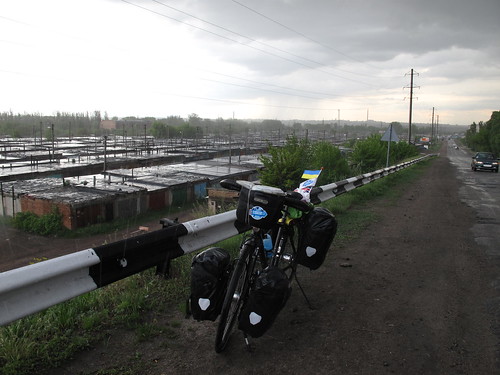
When she began her journey, Sarah started in London, and paddled down the River Thames, and across the English Channel, making landfall in France. After that, she jumped on her bike and started along ride across Europe and Asia. She's made great progress however, and she's already into China and making her way towards the Pacific Coast, where she'll eventually kayak to Japan, and then row across the North Pacific, eventually arriving in Vancouver.
As you can imagine, it has been a very busy and eventful five months for Sarah, with lots of adventures on her route. Although she has been joined by a few others along the way, she's currently riding alone, somewhere in eastern China. She's well ahead of schedule however, and is likely to take some down time for awhile after this epic ride, as she doesn't expect to start rowing the Pacific until the spring of 2012. In a recent blog post however, she did show off her new boat, the Gulliver, which she'll use in that crossing.
Below you'll find a great video of Sarah riding in China which will give you a sense of what it is like for her on the road day in and day out. The video was shot back in July, but shows her taking on a rather long and tough climb on her bike that is built more for strength than speed.
Stay tuned for more updates from Sarah as she nears the end of her first stage and gets ready to hit the water.
The squad of international climbers who successfully climbed K2 earlier this week are now safely down the mountain and making their way to Base Camp. According to a dispatch posted on Gerlinde Kaltenbrunner's website, Ralf Dujmovits and Tommy Henrich climbed up to their "Deposit Camp" today to meet Gerlinde, and her compatriots Maxut Zumayev, Vassiliy Pivtsov, and Darek Zaluski. The six teammates then continued down the mountain to BC, and eventually the Chinese Base Camp, where a team of porters were waiting to load the remaining gear on camels for the trek out. That trek will begin tomorrow, and the entire team will soon be back in civilization once again.
According to Max, the four summiteers didn't truly celebrate their achievement until they were officially back down the mountain. As most mountaineers will tell you, the summit is only half-way to the finish line, and K2 is a particularly treacherous peak on the descent as well as the climb. Fortunately, the team reached Base Camp without any real problems, and they are now resting up and preparing for the journey home.
Max also noted that he and Vassiliy received a call from the Prime Minister of Kazakhstan, Karim Masimov, to personally congratulate them, but they were still on the mountain at the time. Ralf took the call and passed on the sentiments to the two Kazakh climbers.
Now that everyone is down and safe, I want to send one more round of congratulations to the team. They worked hard and were very patient, and in the end their persistence paid off, and they were able to climb the toughest mountain in the world. It is an amazing accomplishment and they've earned every bit of rest and relaxation that they've got coming to them. Well done!
While we're on the subject of amazing long distance runs today, reader Yihui from Singapore dropped me a note this morning to let me know about a fantastic expedition that I hadn't heard about before. It consists of a team of runners, led by Kevin Lin, who set out in April to run the length of the Silk Road. Now, four months later, they're closing in on the finish line at last.
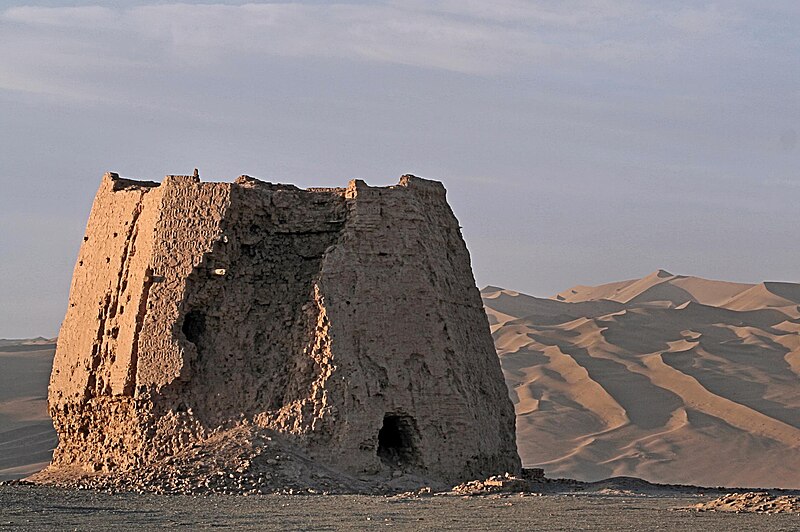
The expedition got underway in Istanbul, Turkey back in the spring and the runners have been traveling east through Iran, Turkmenistan, Uzbekistan, Kazakhstan and China ever since. The plan is to end in the ancient city of Xi'an on September 16th, although since there have been few updates to their online journal since June, it is difficult to know exactly how close they are to reaching that goal. They do continue to upload photos however, and their galleries indicate that they are in China and well on their way to the final destination.
The entire run was created and organized by The Home Expedition, an organization that looks to motivate and inspire more privileged groups of people to work together to create sustainable, long term alternatives for assisting under privileged people and regions. During this expedition, THE has been raising funds to assist other NGO's who are struggling with the problem of providing clean drinking water in the region that they have been running through. This is the THE's first expedition, but they have several others planned for the near future, during which they hope to continue to inspire others into action.
In order to cover the entire 10500+km (6524 mile) Silk Road in the time frame that they've outlined, the team has to average 70km (43 miles) per day for 150 days and under a variety of weather conditions. The entire expedition is being documented, so hopefully we'll get some great video from this adventure. I'd love to see some of the places they've visited along the way.
With their successful summit of K2 now behind them, the team of Gerlinde Kaltenbrunner, Maxut Zumayev, Vassiliy Pivtsov and Darek Zaluski have been working hard to get back down the mountain safely. Today, they hope to descend as far as Camp 1, then finish their descent tomorrow, and start the long trek back home.
After a very long day of climbing yesterday, Gerlinde and Darek were able to make their way back to Camp 4, where they spent the night. Max and Vassiliy stayed in an intermediate camp above C4, but all four climbers headed down early this morning. According to their latest dispatches, they regrouped in Camp 3, where Gerlinde was waiting with hot soup on the stove. After a brief rest there, they continued the descent, with the ultimate goal of reaching C1.
Tomorrow, they'll clean up all of their gear in Camp 1, then make their way down to their Base Camp, where Ralf Dujmovits and Tommy Henrich are already waiting and have most of their gear packed. From there, they'll spend another 3.5 hours descending to the Chinese Base Camp, where a team of porters are waiting with camels to help pack the gear back out to civilization. If all goes according to plan, they should be off the mountain and on their way home by Friday at the latest.
The descent is still a treacherous one, but they have passed the most demanding sections now and should arrive in Camp 1 today without too many problems. The worst of the climb is behind them, and it won't be long until they can get some real rest.
It has been a long season on K2 already, with many ups and downs along the way. But today, the climbers on the North Side of the mountain began their final climb, reaching Camp 1, as they make one last attempt on the summit this year.
According to an update posted to Gerlinde Kaltenbrunner's site, the entire international team met for breakfast this morning and discussed their plans. Apparently after resting for a few days in the Chinese Base Camp, they are now more than ready to go back up. The weather reports look solid for the next few days, and they have moved up to C1 today, with an eye on reaching the summit by Sunday, August 21st.
According to Maxut Zhumayev, the weather should continue to get better as the week goes along, with the best window opening up on the weekend. Between now and then however, plenty of snow is expected on the higher elevations, which could make breaking trail to Camp 4 particularly challenging. Apparently the Kazakh climbers were able to work out their visa extensions as well, as Max and the rest of the crew are part of this summit push. He sent in a dispatch from Camp 1, informing us that they were all safely at their destination, and despite lots of snow, they intend to move up to C2 tomorrow and evaluate their situation from there. If the weather holds, and conditions are good, they'll keep moving up.
There has been no word from the K2's South Side as to whether or not Fabrizio Zangrilli and Kinga Baranowska will make another bid of their own. They've been in BC longer than anyone, and it appeared that they would be running low on supplies and time by the middle of this week, but if the weather looks good for them too, they may have it in them to give it one more go.
Stay tuned. This weekend will be the decisive days in the mountains for these climbers who have been extremely pa
Two adventurers are preparing for an epic expedition that will have them traveling on foot and by kayak from Ulaanbaator, Mongolia to Hong Kong, China. The journey will cover more than 3500km, and because it wasn't challenging enough on its own, they've decided to do it during the winter.
In November of this year, Rob Lilwall and Leon McCarron will set out on a self supported expedition that begins in Outer Mongolia and travels south through the Gobi Desert. From there, they'll cross into China and follow the Great Wall to the Yellow River. Once they arrive at the river, they'll use inflatable kayaks, which they'll carry in their backpacks, to paddle to the city of Xi An, a city whose history dates back more than 3100 years. From there, they'll get back on land and finish their expedition with a trek through the mountains of central China, before ultimately reaching the finish line in Hong Kong. If all goes as planned, that should happen sometime in March of 2012.
The journey will be chronicled and eventually turned into a television series for National Geographic, but will also serve as a vehicle to raise funds for the Viva organization, a non-profit charity that works to provide educational opportunities for underprivileged children across the globe.
No strangers to adventure, Brit Rob Lilwall once rode more than 48,000 kilometers on his bike, starting in Siberia and ending in London. Along the way he visited Tibet, Afghanistan, and a number of other out of the way places. Irishman Leon McCarron is a documentary cameraman who has worked on five continents and has put in a fair share of time on the bike as well. McCarron recently rode more than 23,000km from New York to Hong Kong while shooting footage of the people he met along the way.
Be sure to drop by their website at WalkingHomeFromMongolia.com for more information on their expedition and to follow along when they get started in a few months time. Good luck boys!
This weekend is turning out to be a good one for endurance athletes. Not only do we have an exceptional adventure race in Colorado and the Western States 100 in California, halfway around the world another group of ultrarunners are preparing to set out on the 2011 edition of the Gobi March, a 250km (155 mile) trek through the Gobi Desert.
The annual race, which is part of the 4 Deserts series of ultramarathons, is set to be another grueling affair this year. Race officials were out on the course yesterday and reported that temperatures were around 42ºC (107ºF) and conditions are expected to remain warm after the race gets underway on Sunday.
At the moment, the competitors are all arriving at the Turpan Basin, a remote region of China that is known to be very dry and hot. This year's route will take them through Aydingkol Lake, which sits 155 meters (508 feet) below sea level and is the farthest point from any ocean on the planet. This year there are 152 athletes, from 30 countries, taking part in the Gobi March. Over the course of the six stages and seven days of racing, they'll be completely self supported while out on the course.
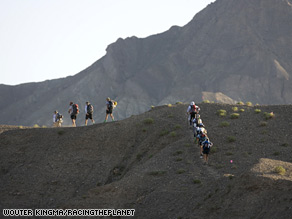
One of the competitors in the 2011 Gobi March is a friend of mine. His name is Wouter Kingma and he'll be taking part in his first ever ultra-event, although he has run plenty of marathons in the past. Wouter is a well known and respected professional photographer who has often attending these kinds of events in a official capacity to take photographs, but this time he'll be on the other side of the lens. He is running to raise money for the ABC Children's Aid Uganda, an organization that works hard to help children in Uganda who are orphaned due to AIDS/HIV or armed conflict.
I want to wish Wouter and all the competitors good luck in this fantastic event.
With the 2011 Himalaya climbing season now officially in our rear view mirror, it is time for the world's top climbers to start focusing on the Karakoram and the challenges that come along with climbing in that range.
Stretching across Pakistan, India, and China, the Karakoram range contains some of the most challenging peaks on the planet. It is home to one of the highest concentrations of mountains found anywhere as well, which makes it a popular summer mountaineering destination, which is about the only time of the year that the weather is good enough to allow safe climbing. Amongst the coveted summits in the Karakoram are Broad Peak, Nanga Parbat, the Gasherbrums, and of course, the infamous K2.
ExWeb has an early season report posted that takes a look at some of the more interesting expeditions set to take place in the Karakoram this year. Amongst them are Christian Stangl, who returns to K2 seeking redemption after last year's debacle. You may recall that last year, Stangl fabricated a summit photo and made a false claim to having reached the top of the mountain. Hopefully he'll be able to top out this year, and put that whole affair behind him.
Gerlinde Kaltenbrunner is also heading to K2, although she'll be climbing from the North Side. Gerlinde has attempted K2 several times in the past, and so far the summit has remained elusive. She hopes to change that this year, and by doing so, complete her final 8000 meter peak.
It seems that there are a number of teams gearing up for Gasherbrums I and II, including Gerfried Göschl, Kari Kobler, and Ueli Steck, who comes off the spring with two successful summits in the Himalaya, and a bit of a disappointment on Everest. In fact, it seems thats where the early climbers are headed first, as ExWeb reports that one of the Gasherbrum teams has already met in Skardu (Pakistan) and is preparing to begin the trek to Base Camp, while another is already en route. That second team has two female climbers, Aleksandra "Ola" Dzik of Poland and Ukrainian Maria Khitrikova, who will attempt the first female double header of both GI and GII.
The Karakoram season is just gearing up, so expect lots of news from the region in the days ahead. The big question this year is whether or not someone will finally summit K2 again. It has been nearly three years since someone stood on top of that mountain.
Friendship is defined as: A friendly feeling or disposition. Yet in the last week we have witnessed President Barack Hussein Obama destroy the special relationship the United States has had with Israel. A relationship based on mutual trust, understanding, and respect. As of Thursday, all that is now a one-way street, with Israel being the friend and the United States actively and openly working to destroy the tiny Jewish state.
In doing this without condemning the violence perpetrated towards Israel, the official indoctrination of Anti-Semitism into the minds of Arab children, the rewriting of history with the purpose of distorting and obliterating the presence of the Jewish people from the Land of Israel, and finally the daily calls for the destruction of the State of Israel has displayed to the world (And especially Jewish voters.) that the United States is no longer a full partner with Israel but just one of many who condemn the Jewish state.
This has left Israel with very few options. They can no longer trust the United States to veto resolutions in the Security Council that condemn it for any whim the Arab/Muslim world decides to invent. And let us face it, these idiots invent so many things against the only beacon of freedom in the Middle East.
On Thursday President Obama was 45 minutes late in addressing the State Department in his second major address to the Muslim world. He was on the phone with Prime Minister Binyamin Netanyahu of Israel who was vainly trying to get him to remove the passage: 1967 borders. This Obama did not do, nor was he going to. In doing this, President Obama has effectively backed the Israelis into a corner. They cannot return to the Auschwitz Borders, nor can they use it as the starting base in negotiations.
Without condemning Hamas for the rocket fire into Southern Israel, or Fatah for the murder of Israelis (Especially the slaughter of the Fogel family.), President Obama has effectively turned the Foreign Policy of the United States in a 180 degree turn away from Israel.
This is leaving President Obama with a problem here at home. To be exact a Jewish Problem here at home. While in 2008 President Obama received over 78% of the Jewish vote, today that support is down to 55% (The exact same number that Jimmy Carter received in 1980.) and it is dropping. While in 2008 the Obama campaign found that their major donors were Jews, today donations from The Tribe is down 60%. The more President Obama's foreign policy turns away from Israel and towards the Muslim world, the more Jews will desert him in favor of a candidate that is more appealing to their values. In an economy that is doing well, with low gas prices, this wouldn't even be an issue. As we know the economy is going to hell in a handbasket, gas is rising out of sight, and this is now a big issue with the Jewish voters.
As for what Israel will do. Sources in the Israeli government have remarked that they are looking for a new partner. A new friend. Russia, France and Great Britain are no friends. Their record of official anti-Semitism for centuries destroys that idea. Instead the Israelis are sending out feelers towards China. China needs a source of high technology. While the Arabs have oil in abundance, they are very low on the Leaders of Technology scale. And while Israel is very short on oil, it is a Leader in Technology (In robotics it will surpass the United States and Japan by 2015.). China will be able to buy oil from anyone, but gaining the technological advantage takes more than money. Takes a willing partner to help them.
It is a shame that the United States under the "leadership" of Barack Hussein Obama has destroyed the friendship between Israel and the United States and may have helped China become a technological giant by forcing a friendship between Israel and China.
Not sure how I missed this story a few weeks back, but I stumbled across it last night while researching another story. According to the Telegraph, a team of Chinese scientists are preparing to launch a new search for a mythical ape-like creature known locally as the Yeren, which seems to be a distant cousin to the Yeti of the Himalaya or North America's Sasquatch.
The researchers are seeking volunteers and funding to launch this latest expedition to go in search of the elusive creature which has had more than 400 sightings in the Hubei Province over the years, although there has never been any hard evidence to suggest that the beast actually exists. Previous expeditions to find the creature took place back in the 70's and 80's, but other than a few strange, and sometimes lurid, tales, there was little to report. Those search teams did find hair and footprints, but the studies of those samples were inconclusive. The new search will use five teams to cover a wider area and will employ the latest technology in the hopes of capturing hard evidence that the Yeren actually does roam the remote and lightly inhabited region.
While I have my doubts about the actual existence of the Yeti, Bigfoot, or the Yeren, these stories still spark a bit of interest. After all, we're still finding new species all the time, and the world has some amazing things still hidden away from us. Chasing myths is usually in vain, but then again, sometimes just taking that leap is its own reward.
So many expeditions that we read about today are focused on visiting some remote place, usually in an effort to raise awareness (and usually funds!) for a cause. While those are certainly noble endeavors, and regular readers know that I don't shy away from writing about them, sometimes it's nice to see an expedition that is being undertaken for the exploration and sheer sense of adventure. The Search4Pardise expedition, led by Arita Baaijens, is a perfect example of just such a journey.
Baaijens is certainly no stranger to challenging journeys. Born and raised in the Netherlands, she spent much of her life caught up in the daily grind, just like the rest of us. However, in 1990, she quit her job as a consultant, bought a small caravan of camels, and began a nomadic life, spending most of the past twenty years wandering the Sahara Desert in Egypt and the Sudan. During that time, she has written a number of books, become an accomplished photographer, and a member of the Royal Geographical Society.
After spending the better part of two decades in the desert, Arita is turning her attention elsewhere. She intends to travel through Russia, Kazakhstan, China and Mongolia, on horseback, in search of the mythical and mystical Kingdom of Shambala, a place that holds deep meaning for Buddhists around the globe.
The legends that surround Shambala are fantastical to say the least. They speak of an idyllic place, hidden somewhere in the vicinity of the region that Baaijens and her team will be exploring, that is said to be a veritable paradise, although there is some debate, even amongst scholars, if Shambala is an actual place or a state of being. The Dalai Lama is one person who does believe it exists, but in order to enter this "Pure Land," one needs to have achieved an enlightened state. And like all good myths, there are accounts to back it up, including some explorers claiming to have found the place, hidden away in a maze of canyons and mountains somewhere in Inner Asia, although no one can ever seem to remember the route in.
Arita is in the process of finishing up a 10 week long reconnaissance expedition in advance of the real exploration mission that is set to go down in 2011, when she will return to the remote, and largely uncharted, Altai Mountains to really begin the search.
For centuries, man has tried to find "paradise" which is defined quite differently in many cultures. It is interesting that even now, in the 21st Century, we continue that search. It should be interesting to see if they find anything on their journey, as it is quite possible that the Shambala myth is based on some ancient, and mostly unknown, civilization that existed in that part of the world hundreds of years ago.
The 2010 edition of the Gobi March is set to get underway this weekend, with more than 150 ultra-runners from around the globe descending on Urumqi, China to begin a week long stage race through the grueling environment of the Gobi Desert.
The Gobi March is part of Racing The Planet's4 Deserts series of ultramarathons. This one takes place in far western China in the city-oasis of Turpan, in the Xinjiang Autonomous Region. Each day will mark a stage of the race, with runners setting out in the morning carrying the supplies they will need for the day. The weather is traditionally quite warm, and dry, as you might expect from a desert race, and back in 2005, it actually reached 122ºF on one of the stages.
At the end of each stage, the competitors will rest for the night in a tent city that is constructed for them by the race organizers. They'll have food, water and shelter while there, but once they hit the trail, it is up to them to make their way between checkpoints carrying their own gear and navigating through the open desert. The top competitors will finish the all six stages in a combined time of roughly 25 hours, but the bulk of the pack will be much further back than that. Day in and day out, this can be quite a difficult event, as the participants are essentially running nearly a marathon each day, in some of the most extreme conditions on the planet.
Maybe while their out there, they'll bump into Ripley Davenport. (And yes, I do know he's in Mongolia!)
There has been a lot of discussion over the past few days about Pemba Dorje Sherpa's plan to find a younger climber to break Jordan Romero's record for the youngest person to summit Everest. He hopes to fins an 11 or 12 year old Nepali child to guide to the top of the mountain, but hasn't ruled out taking his own 10-year old son on the expedition. He's even already received an age exemption from the Nepali Government, allowing him to proceed with his plan. The country currently requires that all climbers be 16-years of age, or older, to climb the mountain, which is why Jordan Romero went to the North Side to climb. At the time, China had no such age limit.
The China-Tibet Mountaineering Association now says that beginning this fall, all climbers must be at least 18-years of age to attempt the climb from the North Side. But not content with just setting a minimum age, the Chinese have also elected to set a maximum one as well. Climbers can now be no older than 60 if they want to climb from the North. They did say that climbers outside of the 18-60 age group could be considered as long as they could provide documentation of their good health, although they also said that no one under 16 would ever be considered. Period.
The North Side of Everest has always been a bit more wild and unregulated than the South Side. Nepal has been more at the forefront of these kinds of issues, so it is good to see China stepping up to institute these kinds of requirements. Hopefully this will dissuade any more attempts on the "Youngest" records.
Now, if only we can convince Nepal to stick to that 16-year age limit too.
The National Geographic Adventure Blog continues to keep us up to date on all manner of stories from the outdoor world. Today, they have a story about a team of climbers that have recently climbed a remote peak in China, and made the first ski descent of the mountain.
The climbing team, which consisted of Kasha Rigby, Ingrid Backstrom, Guila Monega, and Jimmy Chin, made their way to Western China to challenge the 20,000 foot Reddomaine, a summit that falls in the Minya Konka massif. The mountain itself had been climbed a number of times before, but no one had ever skied its slopes, and while it wasn't one of the best known peaks in the world, it offered plenty of challenge.
The climbers took a few chances on their way to the top. They pushed back their turn-around time on multiple occasions, and kept going up despite the hours trickling away. They had to over come some rather technical sections along the way as well, but late in the afternoon on Summit Day, they at last stood on top. It had taken them 12 hours to reach that point, and they would spend another three skiing back to base camp. But it sounds like it was all worth it in the end.
The article notes that this type of climb is becoming more and more popular. Mountaineers are seeking out new challenges on remote and unclimbed peaks, rather than going after the famous 8000 meter summits. They permits are cheaper and easier to obtain, and the technical challenges are more of a draw, so while the crowds continue to grow on Everest, the top climbers are going elsewhere to find what they are looking for. Seems like a really great trend if you ask me.
Alan Arnette had an interesting bit of news posted to his Everest 2010 blog yesterday. It seems just two months before the climbers will descend on Kathmandu, the Chinese have found a way to throw a crimp in some plans for the upcoming season. The Chinese Tibet Mountaineering Association, the governing body that oversees the permitting procedure on that side of the mountain, has announced that they will not be issuing any permits that would allow a climber to make a traverse of Everest this year.
For those who are unfamiliar with a traverse, it is an ascent in which the climber begins on one side of the mountain, say Nepal, makes the usual climb to the summit, and then descends down the other side of the mountain into Tibet. Of course it can work in the opposite direction too, going from Tibet to Nepal.
While the vast majority of climbers won't even notice that this restriction is in place, there were several who have been planning to make a traverse. For instance, Australian climber Andrew Lock was hoping to make the first ever traverse without oxygen and Gavin Turner was going to try for the first ever double traverse. In this case, a double traverse would be starting on one side, climbing to the top, descending on the other, then resting for several days before reversing the route back to the summit and returning to where the climber started.
This change in the permits has forced climbers to make some changes to their plans. Andrew hasn't said what he'll do just yet, and Gavin is now jumping over to Annapurna instead. Meanwhile, Alan notes that David Liano and Bill Burke, who were hoping to make a traverse, will instead attempt a double summit, making one climb on the North Side in Tibet, then traveling to the South Side in Nepal, and making a second climb from there. If successful, this will be the first time that that has been done as well.
While this is a fairly minor bump in the road for most, it is a bit disheartening for these climbers who have been planning for a traverse, which have been done a number of times in recent years on Everest. The CTMA hasn't said why they've stopped issuing these permits, but Alan speculates that they're hoping to have a climber from China become the first to make the actual double traverse. Yay for national pride!
In what seems to be a reoccurring story over the past two years, China has once again shut down the borders of Tibet to foreign visitors ahead of the October 1st celebration of 60 years of Communist rule. According to this story from the AP, the travel ban began on Tuesday and will last through the 8th of October, and it doesn't effect travelers already in the country.
The article says that further security measures have also been taken across all of China, but Tibet in particular to ensure that violent protests don't take place. The government is planning a major parade, fireworks display, and presidential address in Beijing on the 1st, and they want be sure that everything goes off without a hitch. One of the more volatile hotspots over the past few years has been Tibet, and they certainly don't want to have the Himalayan country do anything to embarrass China on the anniversary of the Communist take over.
Tibet has had been shut off to the world on several occasions since 2008, most notably in the spring of that year when protests turned violent resulting in clashes with the Chinese military, who claim 22 Tibetans died in the altercations. Sources from within that country say that that number is much higher, possibly in the hundreds. Following those clashes, Tibet was closed for month, preventing trekkers and climbers from accessing the Himalaya that year. The same thing happened earlier this year, as Beijing braced for another round of protests on the 50th anniversary of the Dalai Lama going into exile. In both of these instances, foreign media was also expelled, which doesn't seem to be the case this time.
Fortunately, the window for closing Tibet is fairly small, and will only hinder a few travelers heading to the region. Most of the climbers are already in country and on their mountains, so it's not preventing access as it has in the past. Still, isn't it about time that someone calls out the Chinese government for these actions? Closing up shop every time they think there may be a problem isn't the way any government should act, but then again, look who we're talking about here.
Sadly, the closing of the borders will mostly have an impact on the Tibetans who earn a living through the tourism trade, which is an important one for that country.
I often write about paddlers making first descents on some remote river somewhere, but rarely do you have the opportunity to write about a last descent. That's exactly what is going to happen on the Yangtze River in China this year, as the great dam project there is finally complete. For years, scientists and environmentalists have warned that the landscapes there will be changed forever thanks to this series of dams, and it's going to change the course of the river, both literally and figuratively. Check out the video below for more info on the last descent of the Yangtze.
Thanks to the Outside Blog for the heads up on this one.